11/9/2005, 7:13 pm
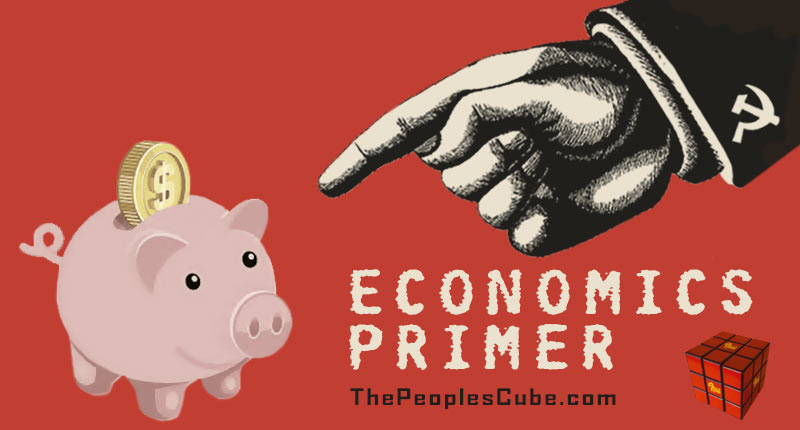
Welfare economics is the branch of the science that concerns itself with total utility in an economy; i.e., making the most efficient use of resources so that all of society is better off. It is only marginally related to what racists call "welfare"; i.e., government payments to the neediest and the most vulnerable among us.
To make things easier to understand, let's look at an example. Say we have a sub-section of society comprised of exactly two people: You and me. You have a watch, and I take it. You no longer have your watch, and now I have your watch. To an uneducated person, this might seem like a neutral event. After all, the watch is still there -- only its ownership has changed. Your loss is my gain; it's a "wash".
Or is it?
The fact is that society gained by this transaction. Why? Because you are a student whose time is worthless, and I am a high-powered and internationally respected professor whose time is extremely valuable. That is, if I waste a minute, society suffers. If you waste a minute...well, no one even knows whether you are dead or alive, let alone caring about how you spend your time. I need to keep track of time, and you might not even know how to tell time. So, clearly, society benefits if I take your watch.
And yet, people have problems with the above logic. Specifically, some people (generally of a neo-conservative fascist bent) might claim that if my time is so valuable, then I could simply purchase the watch from you. But that is very inefficient because you might not want to sell it to me. Wouldn't it be simpler if I just take it instead?
More sensible people, however, raise a much more valid point. Specifically, would it not be fair, efficient and moral for me to not take your watch -- and instead have the government take your watch and then give it to me?
One can easily see how this theory can be used to improve society's welfare in many ways:
- Surgeons should occasionally dismember their patients and give their organs to those who need them.
- Money should be taken from people who have above-average wealth and be given to people who have below-average wealth.
- Courts should confiscate unproductive land and award it to those who can put it to best use, like, say condemning people's homes so that a large business can use the land.
Fortunately, the United States Supreme Court is enlightened enough to actually enforce that last application. And though our tax policies are far from perfect (that is, we have not achieved complete global income equality), in principle, at least, we are approaching the second application.
What is most sorely needed is a welfare maximizing health-care policy; there are too many ill people who need organs for us to allow all healthy people live. Simply nationalizing health care is not enough.