7/8/2006, 3:30 pm
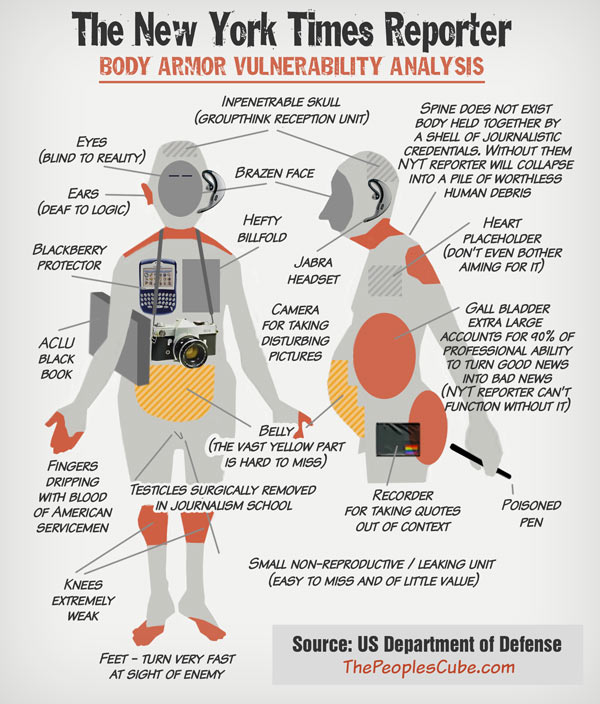
Earlier this year the New York Times courageously exposed vulnerabilities of US body armor, accompanying the story with a controversial diagram and a leaked Pentagon paper in a PDF file, identifying the best areas to shoot at. Today the Pentagon responded by releasing a diagram that details vulnerabilities of the New York Times journalists, which analysts predict is about to become the focus of a new media fury.
"The Pentagon released the results of their secret research despite our strongest objections," said Bill Keller, the executive editor of The Times, in an urgent statement. "It can seriously damage our ability to gather and publish information that is harmful to the United States."
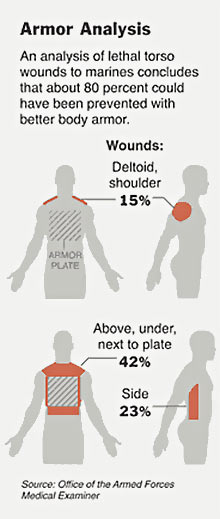 "This is clearly a retaliation for our recent exposure of the US surveillance of foreign bank transactions, as well as our diagram revealing weak spots in US military gear," Keller continued. "But the both stories presented a great public interest. We are an international paper serving the world community, and if al-Qaeda subscribers of the New York Times are interested in how they can inflict the most damage on imperialist Western crusaders, it is our obligation to provide them with a diagram."
Original NYT diagram reveals US armor vulnerabilitiesSpeaking for the Pentagon, US Secretary of Defense Donald H. Rumsfeld said they've only "taken the Times' principled approach a bit further" and, similarly, identified vulnerable areas in the gear of the New York Times reporters. "Let them taste their own medicine. We trust that the progressive New York Times staff won't mind our publication since it strictly follows their own guidelines in fairness, impartiality, and newsworthiness," Rumsfeld said.
"It's a disgrace," retorted Keller in his statement. "Only we can decide what the world has the right to know. It is our God-given monopoly. The Pentagon ought to think harder whether a public's right to know might overwrite somebody's right to work against this country and its government."
"The Times have long been acting like spoiled brats that kick their parents in the shin knowing full well that the parents won't retaliate and will still protect them," the Secretary of Defense concluded. "We thought we might teach them a little lesson in responsibility by walking away and just leaving them alone in the street for a while."
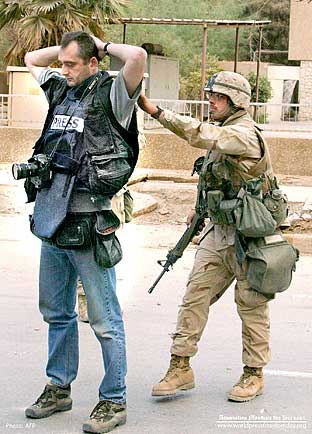
US military retaliates by researching weak spots in reporters' body armor
"The Pentagon released the results of their secret research despite our strongest objections," said Bill Keller, the executive editor of The Times, in an urgent statement. "It can seriously damage our ability to gather and publish information that is harmful to the United States."
Original NYT diagram reveals US armor vulnerabilitiesSpeaking for the Pentagon, US Secretary of Defense Donald H. Rumsfeld said they've only "taken the Times' principled approach a bit further" and, similarly, identified vulnerable areas in the gear of the New York Times reporters. "Let them taste their own medicine. We trust that the progressive New York Times staff won't mind our publication since it strictly follows their own guidelines in fairness, impartiality, and newsworthiness," Rumsfeld said.
"It's a disgrace," retorted Keller in his statement. "Only we can decide what the world has the right to know. It is our God-given monopoly. The Pentagon ought to think harder whether a public's right to know might overwrite somebody's right to work against this country and its government."
"The Times have long been acting like spoiled brats that kick their parents in the shin knowing full well that the parents won't retaliate and will still protect them," the Secretary of Defense concluded. "We thought we might teach them a little lesson in responsibility by walking away and just leaving them alone in the street for a while."
US military retaliates by researching weak spots in reporters' body armor