11/25/2012, 4:16 pm

Welcome to The People's Book Club™, where we gather around with Beet Mocha Lattes and munch on Beet Biscotti and discuss the very latest in Progressive literature - reading that promotes and validates our Progressive values while relentlessly condemning all things capitalist and conservative.
Our current selection is...
WINTER OF THE WORLD by Ken Follett.

From the blurb:
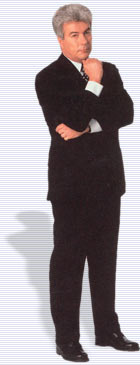
Carla von Ulrich, born of German and English parents, finds her life engulfed by the Nazi tide until she commits a deed of great courage and heartbreak. . . . American brothers Woody and Chuck Dewar, each with a secret, take separate paths to momentous events, one in Washington, the other in the bloody jungles of the Pacific. . . . English student Lloyd Williams discovers in the crucible of the Spanish Civil War that he must fight Communism just as hard as Fascism. . . . Daisy Peshkov, a driven American social climber, cares only for popularity and the fast set, until the war transforms her life, not just once but twice, while her cousin Volodya carves out a
position in Soviet intelligence that will affect not only this war—but the war to come.
These characters and many others find their lives inextricably entangled as their experiences illuminate the cataclysms that marked the century. From the drawing rooms of the rich to the blood and smoke of battle, their lives intertwine, propelling the reader into dramas of ever-increasing complexity.
As always with Ken Follett, the historical background is brilliantly researched and rendered, the action fast-moving, the characters rich in nuance and emotion. With passion and the hand of a master, he brings us into a world we thought we knew, but now will never seem the same again.
Very impressive indeed, but I can write a more concise blurb that sums up this daunting doorstop of 900+ pages in only four words:
Leftwing good, rightwing baaaaad.
Yes, comrades, that's pretty much the whole book: Animal Farm without the animals and offensive, lame “satire.”
For leftwingers, as we all know—whether they are Democrats, British Labour, Socialists, or Communists—are kind, wonderful, big-hearted and open-minded people who care and think of nothing but raising awareness of the need to make the world a better place. Granted, the Communists in particular do tend to break more eggs than the others. But they mean well, for they're only trying to “protect the Revolution” (or as Obama would say, “guard the Change”) and someday, when people even kinder, more wonderful, with bigger hearts and minds so wide open that you wonder if everything within has spilled out and there's nothing there anymore—well, once those people are in power, the world will be that gloriously better place, and there'll be no more broken eggs.
Rightwingers, on the other hand, are stupid and evil and they lie. Why, there is utterly no difference between a Gestapo thug, a Tory MP, or the bitter clinger in Midwest America misguided enough to vote for a Republican. Yes, we all know that, too, but it never hurts to inform the masses of this fact as often as possible, so Comrade Follett takes great care to remind readers on just about every other page. Why, he just about pounded it into my head till my own mind split wide open and my brains took on the consistency of fine mush, so I must now rely on the government to tell me how and what to think.
There are three types of characters in this book: Progs, almost all of whom run for political office because they care enough to help the less fortunate and thus make the world a better place; irredeemable rightwing Fascists who always get what's coming to them; and people who could be Fascists and even flirt with it out of some pathetic need to be part of a cool “in” crowd, until they undergo a glorious epiphany and embrace the Progressive cause.
For instance, the character of Daisy was a very spoiled rich little daddy's girl who, if she'd been around today, would've chucked it all to join the Occupy movement. She reminded me of Rose in Titanic, who contemplated jumping off the back end of the ship rather than endure another dinner party with beautiful place settings, bountiful cuisine, and “the same mindless chatter”, yet found hope and a reason to get up in the morning via the simple joys of spitting over the ship's railing. Today she'd experience that same meaningful fulfillment by peeing on a police cruiser.
Oh, and about the character Lloyd, who went to Spain only to discover “that he must fight Communism just as hard as Fascism”? Let us not be so quick to denounce him for thoughtcrime, for he is, in fact, a true Prog who reminded me of Jodin Morey. Yes, I speak of the same Jodin Morey who once donned an orange suit and black hood and went parading around the streets of Minneapolis to show his solidarity with the Gitmo detainees.
As soon as he was confronted by the awful notion of having to fight Communism—in other words, as soon as he realized he didn't feel that much solidarity with his chosen cause—Lloyd, like Jodin, quit and ran back home as if he'd just been shot in the back with a rubber pellet gun by police who confiscated his cell phone because they suspected it was a weapon, and didn't even ask him more than once if he was okay. I only hope he remembered to take off his orange jumpsuit and cram it into a dumpster behind some little cantina before he hopped into his Prius and took off for the Pyrenees.
And like all good Progs, Lloyd is a victim. You see, all his life he'd been led to believe that his real father was killed in The Great War before he was born. Years later, he finds out that he is actually the result of an illicit, albeit consensual affair his single mother had with a married man who's still very much alive. Lloyd, being open-minded and tolerant, is pretty cool with that whole scene…up to a point. Let's break it down:
Father wasn't really some nameless, faceless soldier killed in the Great War? No problem. You're anti-war anyway, and you feel better knowing your father wasn't dumb enough to get duped into fighting some illegal, immoral war to steal the Kaiser's oil.
Mother a slut? No problem. It's just another lifestyle choice, and you believe in tolerance.
Born out of wedlock? No problem. Not even back in those days. It's just rightwingers who think you're a dirty subhuman freak of nature because your parents weren't married.
But then you find out your father was really a titled member of the upper class British aristocracy. BIG PROBLEM!
He could endure anything but that. (Well, that and fighting Communism.) Oh, the shame of it all! Indeed, Lloyd was so ashamed and enraged and horrified, and felt like such a dirty subhuman freak of nature, that I can't for the life of me figure out why he didn't go out and loot Harrods before burning the whole place to the ground. That's what I would've done.
But my absolute favorite part of the book has to be on pages 538-39, when this Russian general who sort of reminds me of our own Chairman Meow is fleeing Moscow ahead of the approaching German Army, and he's driving a car with a piano strapped to the roof and some bimbo in the passenger seat and a whole lot of women's underwear stashed in the trunk. He gets stopped and is confronted by a woman who reminds me of my own dear mother, Yelling Yelena—or maybe even my own younger, more winsome self. And when she finds out he's stealing women's underwear (could be that's why he reminds me of Meow), she actually beats him to death with her shovel!
That, for me, remains the highlight of the whole book.
 Just finished Daily Life During The American Revolution [First], Denneen & Volo (2003). Good stuff. Seems to be a series/theme by different historians, i.e. Daily Life During World War I, Heyman (2002), etc. Ordinarily I try to stay with original source material and not "interpretations." These seem to be fairly straightforward factual records based on original sources, as bibliographied. Pinkie! come down! Don't jump! Don't go there! It's not worth it!