7/23/2015, 6:19 pm
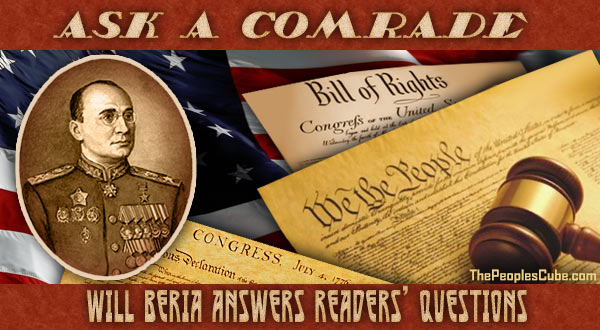
People ask me all kinds of questions and I give them all kinds of answers. It is time I have my own "Ask a Comrade" column. Let's begin.
Q: Why does the Supreme Court decide what a recently passed law means? The people who wrote and passed the law are still around, why don't the authors get to say what it means?
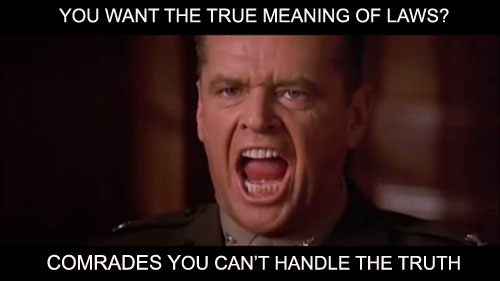
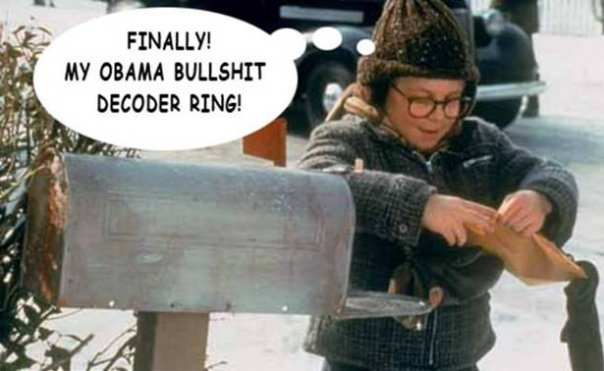
A: That's just the American constitutional process. Which the framers didn't know about until the very first Supreme Court divined it hidden in the Constitution. This is called a ruling by divined right. Only judges, or better yet justices, can decipher the true meanings because they're encrypted in what they call the legal code.
Then there's the Constitution. Being a living document, it needs doctoring.
The court not only says what the Constitution and laws mean, they also define the words used. And so 'fine' means 'tax' and 'state' really means 'national government.' As a result, lawmakers don't know the meaning of the laws they're writing or passing until the Supreme Court tells them afterward. This explains why Congress must pass a law in order to find out what's in it. These are laws of unintended consequences.
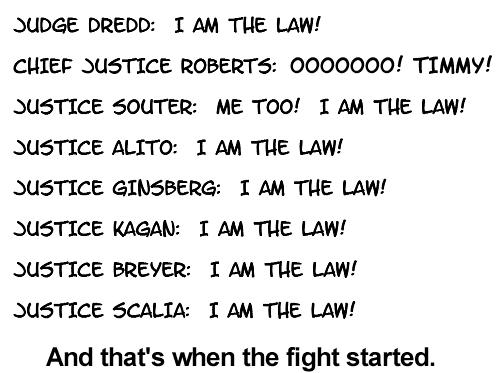
You can think of Supreme Court justices as sort-of law seers. They wear black robes, sprinkle their speech with Latin, and meet in special justice chambers to communicate with the spirit of the law. All this helps them reach a decision, which often require a lot of language stretching because some decisions are quite a reach.

Q: Why does the Supreme Court decide what a recently passed law means? The people who wrote and passed the law are still around, why don't the authors get to say what it means?
A: That's just the American constitutional process. Which the framers didn't know about until the very first Supreme Court divined it hidden in the Constitution. This is called a ruling by divined right. Only judges, or better yet justices, can decipher the true meanings because they're encrypted in what they call the legal code.
Then there's the Constitution. Being a living document, it needs doctoring.
The court not only says what the Constitution and laws mean, they also define the words used. And so 'fine' means 'tax' and 'state' really means 'national government.' As a result, lawmakers don't know the meaning of the laws they're writing or passing until the Supreme Court tells them afterward. This explains why Congress must pass a law in order to find out what's in it. These are laws of unintended consequences.
You can think of Supreme Court justices as sort-of law seers. They wear black robes, sprinkle their speech with Latin, and meet in special justice chambers to communicate with the spirit of the law. All this helps them reach a decision, which often require a lot of language stretching because some decisions are quite a reach.