8/28/2017, 3:09 pm
[img]/images/various_uploads/Questions_Answers_Inner_Comrade.jpg[/img]
A Facebook comrade sent me the above screenshot with a suggestion to comment on it:
So this nonsense hit my wife's FB wall today, and since I just finished your book, it angered even more than it would have normally angered me. That somehow any assistance by the Fed is now deemed "socialism" is completely ignorant prima facie, but honestly, once the Fed gets involved, cleanup will likely take even longer as the bureaucratic process kicks in. The people in New Jersey have all but been forgotten after the press died down, mired in red-tape, many have failed to get the promised assistance by the government elites. Maybe you can speak more to that.
I responded in a "prog-off" mode, and then decided to also post it here as a public service:
The People's Cube answers:
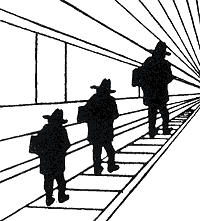
This is a typical "optical illusion" mind game the progs always play. The trick here is the unwitting (or deliberate) confusion of a CRISIS with NORMALCY.
A crisis situation, like natural disasters or wars, require a certain code of conduct and ethics, and government exists specifically for this purpose (apart from law enforcement and legislation). Survival of a group in a crisis calls for a collectivist moral code.
In contrast, NORMALCY (the absence of crisis) is best handled with self-government on the local and individual level. It calls for an individualist moral code.
Confusing the two situations leads to extolling collectivism as superior to individualism, and central government as a savior. As a result, progs rejoice every time there is a crisis because it justifies their moral code. And that's why we often have a crisis where there shouldn't be one.
With progs everything is a crisis; the entire Obama presidency was one permanent crisis. Without a crisis, the collectivist morality means nothing because in a normal situation, individualism and the free markets are a lot more successful in achieving a peaceful, prosperous, and civil society.
As an example, the military operates by collectivist ethics that require individual sacrifice for the benefit of all. That's because the military's purpose is to handle various crises, from wars to natural disasters. As such it is an essential part of government. But we don't want the rest of the society to be governed like the military and take orders from the government in all aspects of life, asking permission from superiors to do minor personal things.
As an ultimate army-like state, North Korea is a great success story of collectivist morality, and a failure in everything else. A normal society is best served by individual self-government and delegating the collectivist crisis-handling functions to the government and the military where they belong.
A Facebook comrade sent me the above screenshot with a suggestion to comment on it:
I responded in a "prog-off" mode, and then decided to also post it here as a public service:
The People's Cube answers:
This is a typical "optical illusion" mind game the progs always play. The trick here is the unwitting (or deliberate) confusion of a CRISIS with NORMALCY.
A crisis situation, like natural disasters or wars, require a certain code of conduct and ethics, and government exists specifically for this purpose (apart from law enforcement and legislation). Survival of a group in a crisis calls for a collectivist moral code.
In contrast, NORMALCY (the absence of crisis) is best handled with self-government on the local and individual level. It calls for an individualist moral code.
Confusing the two situations leads to extolling collectivism as superior to individualism, and central government as a savior. As a result, progs rejoice every time there is a crisis because it justifies their moral code. And that's why we often have a crisis where there shouldn't be one.
With progs everything is a crisis; the entire Obama presidency was one permanent crisis. Without a crisis, the collectivist morality means nothing because in a normal situation, individualism and the free markets are a lot more successful in achieving a peaceful, prosperous, and civil society.
As an example, the military operates by collectivist ethics that require individual sacrifice for the benefit of all. That's because the military's purpose is to handle various crises, from wars to natural disasters. As such it is an essential part of government. But we don't want the rest of the society to be governed like the military and take orders from the government in all aspects of life, asking permission from superiors to do minor personal things.
As an ultimate army-like state, North Korea is a great success story of collectivist morality, and a failure in everything else. A normal society is best served by individual self-government and delegating the collectivist crisis-handling functions to the government and the military where they belong.