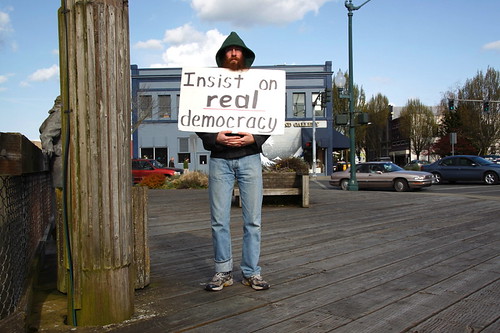
Comrade Obamugabe,
You are close, but no soup for you. If I want to speak accurately, I use the language of the court. Formal dictionaries, as the one you used because I can tell is Merriam-Webster, use broad definitions and most often are not accurately defined. If you wish to speak to me Comrade, I suggest to you that you use the King's English. The LEGAL literature and references that I have studied tell me otherwise. You see, language is important, especially in the court. It is okay to speak broadly in everyday life, however, when you come into my court, you better know the language of the court, my Comrade.
In the United States, we speak three languages: Colloquial English, Formal English, and Legal English. Most of us are bilingual already, that is, we speak and write Colloquial and Formal English. Whilst each are similar, if one tries to communicate using one language while the listener is listening using another language, there is great opportunity for miscommunication. Therefore, language is important.
Colloquial English is the language pertaining to common conversation, or to mutual discourse; as colloquial language; a colloquial phrase; conversational; hence, informal. It is a dynamic, loosely defined language, and it can vary considerably from one geographical area to the next geographical area. It proliferates with special and paradoxical interpretations. One must “grow up” with the language to fully appreciate its idiosyncrasies. Foreigners always have great difficulty dealing with the various idioms. For example, if you think something is genuinely wonderful, you could say “That's really cool!” or “That's really hot!” Another way to express great approval is to exclaim, “That's bad!” or “That's good!”
Form English is precise communication that requires a more formal structure. Formal English is taught in the private and public schools, and home schooling. Formal English is the language of choice when strangers meet to execute common transactions. It is a stable language that typically requires multi-decades or even centuries to evolve its meanings. Unless otherwise specified, English dictionaries cast all words in Formal English, with the more common usage placed at the beginning of the definition. Dictionaries often will show colloquial (slang) or legal meanings as well. They are placed after the more accepted usages.
I favor Webster's Dictionary (1828 Edition) because it is useful in understanding words used in the Constitution for the United States of America, or in general to understand original intent and meaning. G. & C. Merriam Company's “Webster's Unabridged Dictionary” published in 1953 (or earlier editions) is great for understanding modern meanings.
Comrade Obamugabe, when you want accuracy in communication, Legal English is the preferred language. Legal English is also known as the "King's English," or the language of the court. What is the "King's English?" The King's English is correct or current language of superior speakers, in other words, pure English. Legal English is extremely established, requiring thousands of years for changes in meaning. For the reason that accuracy is required for excellent legal communication, legal definitions tend to be loquacious. The extended explanations are necessary to achieve accuracy. Legal dictionaries are not all called dictionaries per se. The more thorough dictionaries are called "Corpus Juris" or "Words and Phrases." A given word could require thirty or more pages to arrive at its exact meaning.
I favor, in descending order, Bouvier's Law Dictionary (1872 edition or earlier), Ballentine's Law Dictionary (first edition only), and Black's Law Dictionary (fourth edition or earlier). Later editions of Bouvier's Law Dictionary are more like legal encyclopedias.
Black's Law Dictionary Fifth Edition and higher are not as accurate because references to common law are progressively removed, and Roman (civil) law concepts are increased in order to conform to the law enforcement needs of power centers within every society. Power centers are organizations and social groupings, such as political parties, labor unions, church groups, media centers, government, and professional societies that hold political power based on their claim to represent their members and on their ability to lead public opinion.
The general rule of thumb is that older dictionaries are useful for understanding natural rights, natural law, common law, personal sovereignty, individual rights, and the point of view of the people. Newer dictionaries are useful for understanding civil rights, Roman (civil) law, centralized authority, and the government's point of view. All attorneys and judges are educated and trained in the latter; nonetheless, judges may go to special seminars to learn the former.
With that said, allow me to repeat my previous rhetoric.
Here are legal definitions of republic and democracy:
"Government. The government is but an agency of the state, distinguished as it must be in accurate thought from its scheme and machinery of government. In a colloquial sense, the United States or its representatives, considered as the prosecutor in a criminal action; as in the phrase, 'the government objects to the witness.'" Black's Law Dictionary, Fifth Edition
"Government; Republican Government. One in which the powers of sovereignty are vested in the people and are exercised by the people, either directly, or through representatives chosen by the people, to whom those powers are specially delegated. In re Duncan, 139 U.S. 449, 11 S.Ct. 573, 35 L.Ed. 219; Minor v. Happersett, 88 U.S. (21 Wall.) 162, 22 L.Ed. 627." Black's Law Dictionary, Fourth Edition
"Democracy. That form of government in which the sovereign power resides in and is exercised by the whole body of free citizens directly or indirectly through a system of representation, as distinguished from a monarchy, aristocracy, or oligarchy." Black's Law Dictionary, Fifth Edition
Notice that in a democracy, the sovereignty is in the whole body of the free citizens. The sovereignty is not divided to smaller units such as individual citizens. To solve a problem, only the whole body politic is authorized to act. What is more, being citizens, individuals have duties and obligations to the government. The government's only obligations to the citizens are those legislatively pre-defined for it by the whole body politic.
In a republic, the sovereignty resides in the people themselves, whether one or many. One may act on his or her own or through his or her representative as he or she chooses to solve a problem. Further, the people have no obligation to the government; instead, the government being hired by the people is obligated to its owner, the people. The people own the government agencies. The government agencies own the citizens. In the United States, we have a three-tiered cast system consisting of people ---> government ---> citizens.
Furthermore, a republic is the best form of government for liberty, but the worst form of government for enslavement. What makes a republic the best? Everybody is educated, knowledgeable of the differences, and choose to be people. What makes a republic the worst? Everybody is ignorant, does not know the differences, allow themselves to be citizens, and they get abused, that is what you do to citizens. Citizens are property. If you do not know the difference between a people and a citizen, how can you break out of the citizenship shell? So a republic is a wonderful form of government if everybody is educated. It is a terrible form of government if you are ignorant.
The best way to describe a republic is to first describe a democracy. Democracy and republic are normally used interchangeably; however, there is a distinct difference between democracy and republic. A pure democracy is easily defined, that is, 51 beats 49, majority rules. We hear the word democracy thrown around a lot. In recent years, it is commonly believed that a democracy is the ideal form of government. Supposedly, that is what was created by the Constitution for the United States of America, and the justification for invading other countries and overthrowing their tyrannical governments is, we are told, to spread democracy throughout the world. However, if you read the documents and the speech transcripts of the men who wrote the Constitution, you find that they spoke very poorly of democracy – and if you look at the reality of life in those lands where democracy has been delivered, you find little difference between the old and new regimes, except that the new ones often are worse.
We hear the word democracy from politicians, teachers, attorneys, judges, power centers (such as churches, unions, activist organizations, etc.), government, and media. When do you ever hear the word republic used other than the pledge of allegiance? When do you ever hear the word republic? Never! They do not like the word republic. So what is a democracy? Again, it is 51 beats 49. At first, democracy sounds like a nice idea. Let us get together, argue the issue, and let us vote on it. Whatever the majority wants, the majority gets. Sounds fair, right? However, what a democracy really is a dictatorship of the majority, therefore, the minority has no say or rights. Whatever the majority says, it is mandatory on the minority. Everything is mandatory, no choice. In a democracy, the sovereignty of the state is in the whole body of citizens. When the citizens vote on an issue, whatever they say, is mandatory. The government must obey it, and everybody else subject to it, must obey it. The sovereignty is in the entire group, or the collective. Each individual member of that group have no sovereignty. To be sure, they vote, they have an exercise of sovereignty, they cast the vote, but whatever the outcome is, everybody is subject to it. No choice. That is a democracy. Now, a republic.
In a republic, everybody is sovereign, equally free, and independent. A republic and a democracy are identical in every aspect, certainly. You have representatives, you have voting, everything is exactly the same, not including one little detail. That little detail is the place of sovereignty. In a democracy, the sovereignty is in the entire body. The body acting as a unit; the body politic. In a republic, the sovereignty is in
each individual member. Now, if you, Comrade Obamugabe are sovereign, and I am sovereign, you and I are equal and independent, are not we? Yes. I have nothing on you and you have nothing on me. The only time you have anything on me is when I injure you. If injure you, you are entitled to compensation, not profit, but compensation for your lost, whatever you lost. And if there is an argument about what you lost, you and I can go to a jury and allow the jury to figure it out. In essence, in a republic, we all are sovereigns, we all are equal and independent. Now, when an issue comes up for argument, it works just like in a democracy. We all argue back and forth, and then we vote on it. And when we vote on it, we now have a conclusion. However, in a republic, whatever that conclusion is, we do not allow the majority to take over the individual sovereign. If the majority could, you would not be a sovereign, and I would not be sovereign. We would have a democracy. If we all are sovereigns, and if we do not allow the majority to take over, what does that say? It says that whatever the majority decides, that decision is advisory, not mandatory. In a democracy, everything is mandatory. In a republic, everything is advisory. You can say, "Shove off! I do not like your way of doing things." You are innocent until proven guilty, not the other way around.
We acknowledge that in our system, in the design of our system, we acknowledge nothing is perfect. The Greeks, when they formed a jury, it consisted of a 1,000 members. Their theory was, no one is rich enough to bride all 1,000 members. So that was their attempt to assure a honest jury. For some reason, I cannot explain why, in our system, our modern system, modern meaning the last 800 years or so, we said that 12 is a good size for a jury. If you can get 12 to agree with you, then maybe you have something going for you. If 12 people say you are guilty, each people on that jury represents 1/12th of society. If 100 percent of society is against you, now the rule becomes mandatory on you. What is the job of the jury? Well, one of the things, as you already know, is to judge the facts. The second job of the jury, which is really the first job, is to judge the law. As a sovereign, as a people, I decree what the law is, then I accuse, and I try to subject somebody to my law. I am claiming an injury. That is an injury to me. So we call in a jury, and the jury judges whether or not my law is reasonable. So this is the foundation of the American system, the common law. Customs and usages. The jury in their hearts, each member knows what is good, and what is evil. So this is the foundation of our system. You can charge anybody with any violation, but you must decree what the law is, and you must say what the facts were that violated that law. The defendant has the ability to call in a jury to defend himself, and the jury judges the legitimacy of that law, and judges whether or not the facts violated the law. That in a simple way describes our system, and our Founding Fathers understood this system.
We are a republic, and as a republic, we all are sovereigns individually and the laws are advisory. Unless you can get 100% of a jury to enforce. With a educated public, educated peers, the system would work well. Frankly, I do trust a jury. If I can get all the information to them, and either way, whether I am a plaintiff or defendant, I would take a chance of a random error by a jury, before I would take a chance on a designed-in error based on precedent that we get from judges. Juries are not bound by precedent, judges are. Judges are bound by statutes, juries are not. Do you see the difference between people and citizen? Those who take an oath or affirmation to support and defend the Constitution and all laws of the United States, etc., etc., is mandatory on them, because they have no choice due to their oath. Their oath or affirmation binds them legally, until they leave office. Here is the strange reality of our system. As I have mentioned in my previous rhetoric, we actually have two forms of government in place. We have a system for the people, and we have another system for the citizens. Republic under common law for the people, and democracy under statutory law for the citizens.
Everybody that I talk to who uses the word democracy in their everyday Formal English, they really mean a republic. Ask them what a democracy is, they describe it, and it pretty much is a republic that they are describing. Republic and democracy are often misconstrued and interchangeable. When you go to court, do not use the word democracy because it has a different meaning than Formal English. Republic and democracy are two different subjects. Basically, as I said earlier, language is important. If you are going to court, educate yourself on Legal English.
During the late 1970s, our fellow Comrade,
Ayatollah Khomeini, was interested in ordaining and establishing some form of government for Iran. He chose a republic for Iran. Why? Well, it is very simple. The people of a republic are above the government because the people are sovereign. The people are not above the common law, but they are above the government's laws. The people who are citizens are subject to the government's law because they are citizens of the governmental entity. A republic, in one sense, is the best form of government for liberty, in the other sense, a republic is the worst form of government for slavery. What makes the difference? The difference is education, the knowledge of the people. If the people are educated and knowledgeable of their relationship between themselves and the government, then there is liberty. If the people are ignorant of their relationship between themselves and the government, then there is slavery and oppression. If you do not know that you can be a people and you are convinced that you are a citizen, then guess what, you will be subject to the government. A republican form of government is how "the powers that be," or "international elites," in or out of the government, excuse themselves from government jurisdiction. The powers that be know they are exempted from the government, but the citizens do not know. Therefore, the powers that be can operate a benevolent dictatorship over the citizens only while the people remain sovereign. That reminds me of King George III, he said, "It is I, who desires what is good and what is not good. Therefore, everybody who dost not agree with me is a traitor."
In a republic, the people are liberated, they possess sovereignty. If everybody knows that he or she is a people, then everybody is independent, free, and sovereign. You see, in a republic, whatever rules are created by vote or legislation, those rules are optional, not mandated. In a democracy, rules are mandatory on everybody, that is, majority and minority. In a democracy, everybody must follow the rules of the pretentious majority because the majority rules in a democracy. Our Founding Fathers understood this reality. Again, in a republic, the rules are advisory whereas in a democracy, the rules are mandatory. There is one exception in a republic, that exception is if 100% of a jury convicts against you, then that rule is mandatory on you. That is the line between mandamus and advisory. In a democracy, whatever rules are passed, they are mandatory on all citizens, everybody; majority rule. In a republic, whatever the majority says is advisory on the minority. Big difference, right? To deprive the people of their sovereignty, it is first necessary to get the people to agree to submit to the authority of the entity they have created. That is done by getting them to claim they are citizens of that entity. Amendment XIV, born or naturalized in the United States, and subject to the jurisdiction thereof, then you are a citizen. Otherwise, you must be a people.
Our Founding Fathers made a very marked distinction between a republic and a democracy and said repeatedly and emphatically that they had founded a republic.
Comrade Obamugabe, I hope this new rhetoric is helpful.