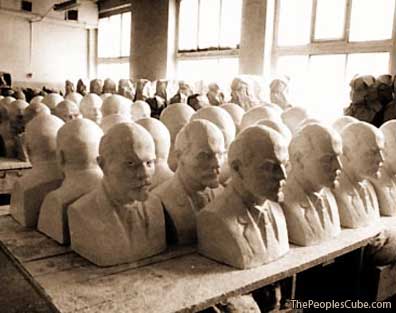
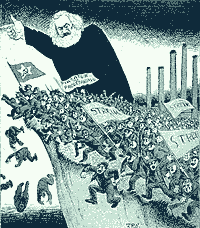
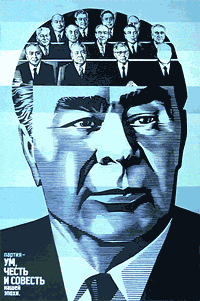
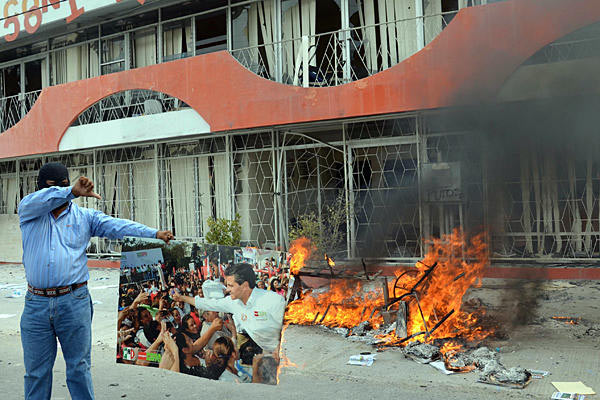
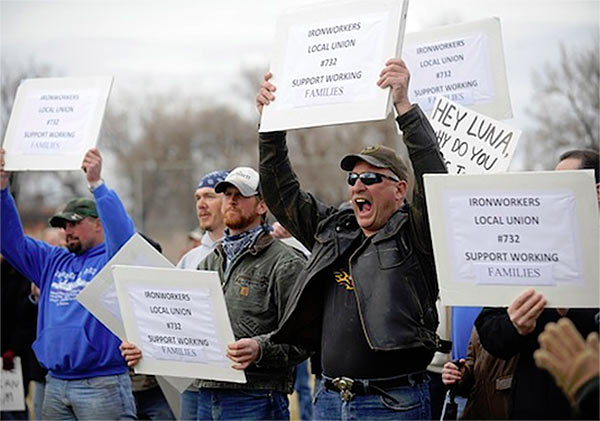
A seven-part essay | As seen on Pajamas Media 1. Lenin: Trade Unions are a School of Communism |
![]() 1. Lenin: Trade Unions are a School of CommunismThe "card-check" debates in the US Congress reminded me of my own experiences with trade unions in the USSR, where organized labor was part of the official establishment and union membership was universal and mandatory. It also reminded me of how that system's seemingly magnanimous goals - fairness, economic equality, and social justice - in real life brought forth a rigged game of wholesale corruption, forced inequality, and grotesque injustice. Years later, the same Orwellian misnomers are catching up with me in America. One of them is called "Employee Free Choice Act" - a legislation that deprives workers of free choice by replacing private balloting with publicly signed cards in the presence of pushy union organizers. Bad as it is, card check is only a means to a larger end. Proponents of "redistributive justice" would love nothing more than use a forced expansion of labor unions as a vehicle to deliver America straight into a utopian swamp, where they will gain extraordinary powers while the rest of the nation will be doomed to repeat the Soviet scenario of slow death caused by social, economic, and moral decay. Defeating the card-check bill alone will not affect the ideology that has spawned it - just as curing a symptom of a disease will not remove the infection. It is the ideology, therefore, that we must address and learn to recognize in its various manifestations. No matter where I worked in the USSR, I was always a union member without so much as a formal notice - starting with the student union in college and then on to whatever union was assigned to the state-run enterprise that hired me, regardless of the job description. The only indicators of this one-sided relationship were monthly union dues, automatically deducted from my measly wages. It was like paying alimony for a fling I never had. To be fair, in the early 80s, I did go on a union-subsidized one-week tour of Uzbekistan - mostly because a friend knew someone at the union office who owed him a favor. But that was it. Every time I visited a union office in the USSR, I saw the same prominently displayed poster, "Trade unions are a school of communism - V.I. Lenin." At the time it seemed like a sweeping exaggeration, similar to other Lenin gems like "Communism is Soviet power plus the electrification of the entire country," which any student of arithmetic could reformulate as "Soviet power is communism minus the electrification." But recent events in American politics have made me wonder whether the union movement might actually be all that Lenin's quote implies and more - a school, a workshop, and a gateway to communism. Ideologically, both unionists and communists share the slogan of "economic equality and justice" - two incompatible concepts, given that just rewards make people economically unequal, while forced economic equality leads to great injustice. The pursuit of these contradictory goals in real life results in a dreary outcome. Since absolute equality is unattainable for reasons we will discuss later, forcing it on a society only replaces natural inequality with forced inequality. In this sense, the difference between the two movements is in their radius: communists fancy a forced "economic equality and justice" for all, while the unions limit it to the select group composed of their members. Strategically, both movements work toward their goals by divorcing wages from labor productivity, stifling the free market, and expropriating and redistributing wealth - all the while blaming the resulting failures and misery on the capitalist "enemy." This can put even non-communist union members in a state of mind that makes them ripe for Marxist propaganda. We can see why Lenin considered communism to be the final destination of the union movement. In theory, unions become workshops of communism only when they go beyond their original legitimate purpose of collective bargaining and taking care of work-related issues (safety, training, etc.), and turn into collectivist pressure groups that engage in class warfare. In practice, however, there hardly is a union in existence that hasn't become a tool in wealth redistribution schemes that use the "common good" as an excuse for voter fraud, coercion, intimidation, and diverting membership fees to support anti-business policies. The ultimate result of the unions engaging in class warfare was exemplified by the misery of unionized workers in the USSR, whose fleeting desire to be "free from the shackles of capitalist exploitation" led them into permanent slavery at the hands of the state-run economy. As soon as the factories were turned over to the workers, union perks were reduced to little red flags with Lenin portraits, badges, and honorary titles like "The collective of communist labor." In American terms, that roughly translates into awarding a "Best carmaker of the month" bumper sticker to an auto worker who can't afford a car. Union perks mean nothing when there is nothing left to redistribute. The Soviets learned it the hard way. The American unions don't seem to be able learn from the mistakes of others and admit that their own perks can only exist in a free and competitive economy that ensures growth and generates wealth - also known as "capitalist exploitation" in the lingo of the champions of "redistributive justice." By promoting a state-regulated economy and undermining private businesses whose employees they claim to represent, the unions objectively undercut the workers, who are paying for it with lost jobs and incomes. Setting up the capitalist economy for destruction in this manner qualifies the unions as "a school of communism." This is not an anti-union argument. To call it anti-union, one has to believe that a union's main purpose is to siphon the nation's wealth to its members. Or that the unions were created to provide logistical support to leftist radicals in their struggle for power.

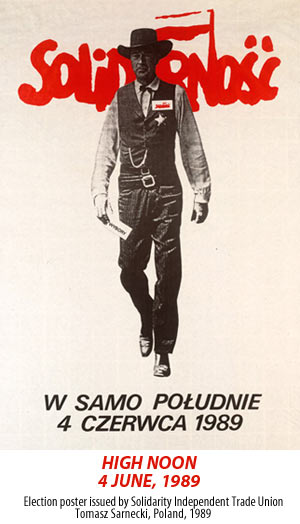
The workers are not herd animals, nor are they a separate biological species with a different set of interests. They are as human as anyone else who possesses a mind and free will, and therefore their long-term interests are not different than the rest of humanity. And since the interests of humanity lie with liberty, property rights, and the rule of law, this is what the unions should stand for. The shining example of this is Poland's Solidarnosc, an independent union that spearheaded the overthrow of the oppressive communist regime in 1989. Or the struggling labor unions of Iran, who oppose the corrupt and oppressive theocracy of the mullahs and could use a little more international solidarity right now, as their leaders suffer beatings, imprisonment, and persecution at the hands of the Islamic Republic's Revolutionary Guards. Too often, however, the unions blindly take the opposite side and support state-enforced redistribution of wealth, forgetting that whenever a government adopts forced economic equality as official policy, unions become redundant and lose not only their political power, but also the very raison d'ĂȘtre. That is exactly what happened to the unions in the USSR. * * * When Lenin's Party was plotting to take over Russia, it encouraged the unions to engage in class warfare on the Party's behalf and spread the ideas of economic equality and redistribution of wealth. But as soon as the Party was in power, all such activities were discarded. In the words of prominent Party theoretician Nikolai Bukharin, "We asked for freedom of the press, thought, and civil liberties in the past because we were in the opposition and needed these liberties to conquer. Now that we have conquered, there is no longer any need for such civil liberties."
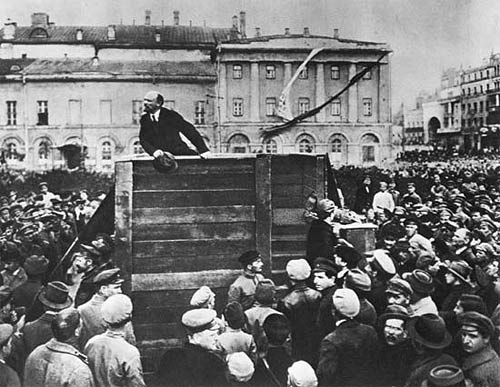
Following the October Revolution in 1917, Russia's former Allies in WWI - France, Britain, and the US - launched a limited military intervention into Russia, seeking to restore the democratic Provisional Government and defeat the communists who annulled Russia's foreign debt and confiscated private property held by foreign nationals. But the Allies were defeated - not by the Red Army - but by their own labor unions, who launched a campaign of solidarity with "the first workers' state," threatening to paralyze their war-stretched economies. By 1920 the Allies withdrew without much of a fight, and the communists won. But inside the "workers' state" itself, labor unions were reduced to the position of puppets. Any greater role would have put them in competition with the Party that claimed to speak for the "toiling masses."
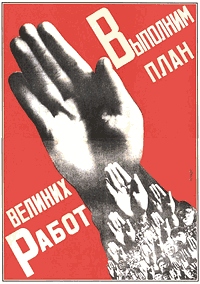
The squashing of union power was gradual. For a few years after the Revolution, unions enjoyed some nominal independence. The 1922 labor code closely resembled those in Western countries, while labor productivity remained only a fraction of Western productivity. Sooner or later this contradiction had to be corrected. The initial understanding was that, by toiling conscientiously for the common good, the workers would become more productive. That never happened. When all the motivational sloganeering, appeals to the workers' conscience, and government mandates to improve productivity failed, the Soviet leaders knew they had hit a wall. The only variable in this equation subject to the Party control were workers' rights - and they were slashed one by one without so much as a squeak from the unionists who had brought it on themselves. By the 1930s, the unions were officially absorbed by the state, having become a subdivision of the Labor Commissariat, but without the Commissariat's authority. Most of the labor code had already been rendered obsolete. A single day's absence was punishable by dismissal and, later, by imprisonment. The state practiced compulsory assignment of graduates to workplaces. Being late for work or leaving early became an offense against the state.
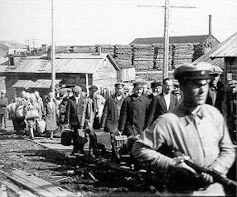
By 1940, a worker could no longer resign from a job without the consent of the management, while the state reserved the right to transfer employees at will and without their consent. Local wage increases depended on decisions made in Moscow. The old labor code was removed from usage and no longer published. A sad joke from that era describes the repressive political climate as follows. Three gulag prisoners are sharing stories of how they got there: "I came to work five minutes late and was accused of sabotage." "I came to work five minutes early and was accused of spying." "I came to work on time and was accused of being a Swiss secret agent." (It was only logical that own economic inefficiency would lead to official xenophobia - a paranoid cousin of unionist protectionism.) Upon Stalin's death in 1953 the terror still lingered for several years. But the reforms of the 1960s already brought a new labor code that gave workers more rights than they could remember. And since the unions were now part of the totalitarian state, union membership was automatic and compulsory, with dues automatically deducted from the salary.
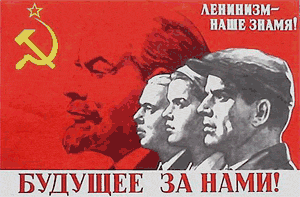
Unemployment benefits didn't exist either. If you didn't have a job the state would find one for you, whether you liked it or not - including sweeping the streets. Since the government owned all industries and services, it could create any number of additional jobs, regardless of economic necessity. Resisting employment by the state was a criminal offense. A brief period without a job was tolerated, but deliberate prolonged unemployment could get one arrested, labeled a "social parasite," and sent off to a labor camp for re-education. The usual suspects were dissidents, vagrants, and dysfunctional alcoholics. While union representatives were prone to unleash "collective indignation" on "unconscientious" workers, few took their moralizing seriously. In the absence of Stalinist terror as an absolute motivator, the "toiling masses" viewed their relationship with the state as a big joke: "they pretend they're paying us, we pretend we're working." The economy was faltering, causing an even greater scarcity of goods, irregular food supplies, and rising prices. The only known independent workers' strike in Soviet history happened in 1962 in the Russian city of Novocherkassk. Not surprisingly, the unions played no part in. It was an unplanned, impulsive outburst caused by the announcement that the government had increased prices on basic food products. Workers at the Electric Locomotive Construction Works were the first to walk out on the job. Most of them were promptly arrested and locked up at the local police station. The next morning, thousands of men, women and children, marched in a column towards the government building to express their demands, and to free the arrested workers.
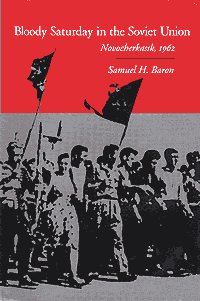
The frightened officials dispatched ethnically non-Russian special forces who were less likely to mix with the locals, and reinforced them with ten tanks and several armored personnel carriers. In the clash that followed, the soldiers shot at the demonstrators from automatic rifles, killing about 70 people and leaving hundreds wounded. How many were imprisoned remains unknown because the incident was hushed from the outset, and the convictions were likely to be veiled as theft, hooliganism, or banditry. There had been no strikes after that for a very long time, non-union or otherwise. Due to the government's total control of the media, no information about the strike and its suppression spilled over the city limits, let alone into the Western press. The media first reported it during the period of Glasnost in 1989 - twenty-seven years later. Around the same time, as the hold of the Party was already waning, Soviet coal miners went on a first since the revolution nation-wide strike against the corrupt communist rule - a strike that was not suppressed by the government and widely reported in the Soviet and world media.
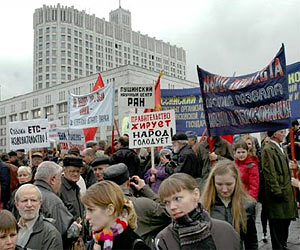
Already after the Party had been disbanded in 1991 and the USSR was no more, unions continued with a series of strikes, this time directed against economic policies of new, barely hatched independent democracies. Under the guise of caring about the workers, the hard-line communist leadership of the unions did everything in their power to add to the existing havoc, destabilize the new governments, and make the workers plead for the return of the old system. Read all about it in the next chapter, How Unions Bring Forced Inequality and Economic Injustice. |
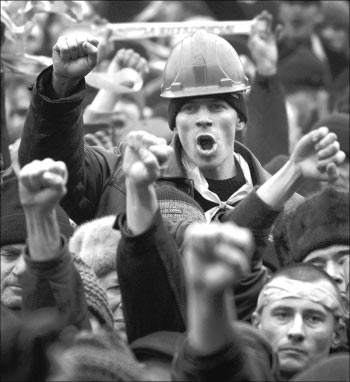
2. Incoming: Forced Inequality and Economic Injustice
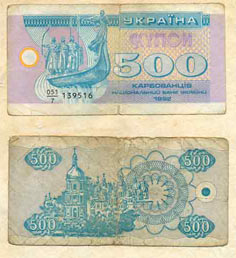
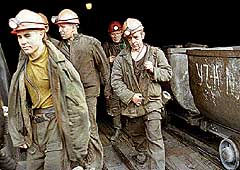
I still lived in Ukraine when the union of coal miners in the Donbass region launched a strike demanding higher wages at a time of rapid inflation. This was in the early 1990s, the first years of Ukrainian independence. The timing couldn't be worse for the barely surviving industries that depended on coal-generated power, as the rest of the country struggled to stay warm in the winter. The miners did get their pay hike. It affected the cost of heating, power, metals, and just about everything else in the country. As the prices went up, the overall gain for the miners was zero but everyone else's lives became even more miserable. The Donbass miners felt they were cheated and went on another strike. Well-positioned to hold the country by the throat, their union demanded one wage hike after another. The cycle repeated over and over, still leaving the miners with no gain but driving all others, especially the pensioners, into abject privation. Before long, other unions demanded higher wages, supported by angry workers envious of the "privileged" status of the Donbass coal miners. In an overstretched economy, new pay hikes ended up driving consumer prices through the roof. The wage race was as irrational as cutting a hole in the back of a shirt to patch a tear in the front, but such is the nature of collectivist pressure groups that can't help but fulfill their purpose of extracting privileges for themselves at the expense of everyone else - even in the face of an imminent economic catastrophe. We all learned a new word, hyperinflation. It equalized everyone, including the Donbass coal miners. One by one, factories started to shut down. The ones that stayed open began to pay workers with their own products. A neighbor who worked at the knitting factory brought home boxes of socks and stockings instead of money. A mother of two, she spent weeks trying to barter the socks for food and other things her family needed, which made her apartment a "sock exchange" and her a "sock broker." My other neighbor worked at a fertilizer plant; he wasn't so lucky. His plant simply closed. Barter was now the law of the land; people and businesses mostly traded in goods, often in complicated multi-party combinations. But the preferred currency was, of course, the US dollar, which was a sign of progress, given that only a few years earlier, owning "capitalist currencies" could result in a visit from the KGB.

1. Inflated union wages are a form of forced redistribution of wealth. They use government protection to suck other people's money in, without giving anything back. 2. Inflated union wages are futile. They lead to inflated prices; the union members do not become richer but everyone else becomes poorer. 3. Inflated union wages produce an economic monster that ravages the country and eventually consumes its own creators. In richer nations it moves slower due to the abundance of nourishment; in poorer nations it quickly destroys economies, causing massive and unwarranted suffering. 4. Inflated union wages are immoral. * * *
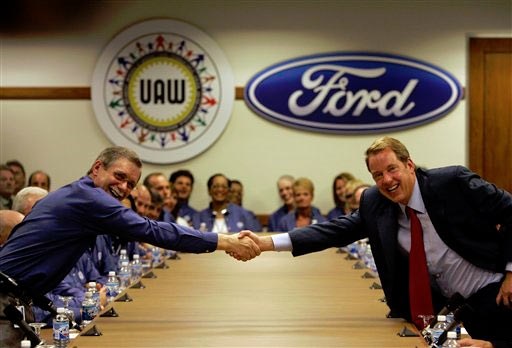
An article by Brent Littlefield in Pajamas Media describes the reasons: "An unbelievable $1,500 of the cost of each domestic vehicle pays for UAW (United Auto Workers) health insurance. That's more than was spent on the steel. As a result, Americans shop elsewhere: U.S. automakers produce less than 50% of the vehicles Americans now buy." I have a friend who prices contracts for a construction company in Queens, New York. He uses a computer program that includes an option of cutting costs by decreasing the number of union workers. He applies this option when all the other factors have been computed and the bid needs to go down a notch. If that price wins him the contract, the next step is to bribe the union shop steward at the site. The "shoppie" pockets the money and turns a blind eye to the presence of a few lower-wage non-union workers. On the construction site at Columbus Circle in Manhattan, an outside freight elevator was built to lift crews and materials. It was operated by an "elevator engineer" who pushed floor buttons at the rate of $37 per hour, competing for the title of world's most expensive bellhop. Two union goons, armed with crowbars, sat at the foot of the elevator all day in lawn chairs, sipping coffee, reading newspapers, or listening to the Howard Stern Show on the radio. Their job was to tell the crews that the elevator was unavailable - at least that's what they told my friend when he needed to lift his workers. But after his boss arrived from Queens with $500 in cash for the goons, the elevator became readily available to their crew for the duration of one week. Thus my college-educated friend learned a new rule of union mechanics: the wheels of a freight elevator needed to be greased for it to appear. This know-how wasn't taught in school, but it appears to be common knowledge on construction sites in New York.
I myself was once threatened by a union agent when I worked for a small Brooklyn-based business involved in reconstruction of New York City public schools. The man called our office demanding $500 to cover the loss in wages for his union. It appeared that our workers had made an opening in the wall for an air duct, then patched it and cleaned up after themselves by collecting the debris into a bucket. Apparently, cleaning up after themselves was a crime; it was supposed to be a union job paid at a higher rate. Our workers broke a sacred rule: no work was allowed unless the unions could use it to squeeze the most out of the employer. I listened as he made his case, then told him to stop being ridiculous and hung up. That triggered a series of angry calls that lasted for several days.
It was true that I didn't know what I might be getting into. It was later explained to me by an older friend, who was active in the unions back in the 1970s. He recalled how some of the business agents (union organizers) carried guns while visiting private contractors. "They wore suits and during negotiations would occasionally let their jackets open, just enough for a glimpse of the hardware they were carrying. I didn't know of any actual murders, but I knew that uncooperative non-union contractors had their tires flattened, trucks vandalized, and storage buildings set on fire." "In every election cycle," he further told me, "union members were instructed who to vote for and called upon to volunteer. I supervised crews that made election signs to be installed at the union's direction. Harmless enough, but as a supervisor I learned about what they used to call 'other activities.' That included members going through legal records and files of prison inmates to register felons. Others were checking real estate records, recording people who left the state to replenish the ranks of phantom voters, and using vacant houses as their addresses. Yet others were combing obituaries for the newly deceased. If the quotas remained unfilled, they searched older death records, sending scores of 120 year-old apparitions to vote.
Guess who they voted for?" Sure enough, the candidates have always been pro-union Democrats with an agenda to pay back their benefactors with government pork at the expense of the taxpayers. My friend assured me that the majority of union members were decent people, but the methods of the union higher-ups included intimidation, coercion, and stealth. "They tell you what kind of a job you can have and where that job can be. They set the rate of pay and dictate how much you will pay them for the privilege. They tell you who to vote for and are extremely politically active. All in the name of the American Worker." Eyewitness accounts are supported by mind-boggling official statistics: "In 2005, upwards of 12,000 UAW 'workers' were paid not to work. The Big Three and their suppliers paid billions to keep downsized UAW members on the payroll as part of a UAW contract. One UAW member, Ken Pool, said he would show up to work and then do crossword puzzles. He earned more than $31 an hour, plus benefits. Higher costs and legacy costs for retirees were transferred to consumers."
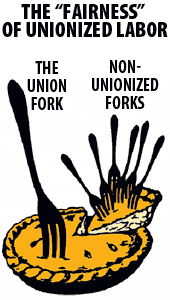
* * * Having worked in various corporate offices in New York, I noticed a sizeable wage gap between those working in the financial sector and all the rest. Contrary to the caricature portrayal in the media, it wasn't just the CEOs giving themselves bonuses; people on even the lowest levels had higher wages. I understood it as the desire of the financial companies to attract the most capable employees, and as private companies they had every right to do so. What I couldn't understand was a similar gap between the union and non-union workers, who received unequal pay for equal work regardless of their qualifications - a practice the government openly supported and even encouraged by preferential treatment of union contractors in the name of "economic justice." "Justice" in this case means that non-union employees often work longer and harder while union members enjoy better wages and benefits, as well as job security and other unearned perks. It's even more grotesque once you realize that union perks can only exist on condition that the unprivileged workers of this country and the rest of the world continue to pick up the union tab by paying the artificially inflated consumer prices, as their much lower wages help maintain the cost of living at the union employees' level of comfort. This was exactly what I thought when I observed the sleepy unionized employees at the New York City Housing Authority distributing project documentation to private contractors that was absolutely illegible; it never occurred to them that photocopies should be made from the original sheets and not from the spawn of a hundred generations of copies that were more suitable to conducting Rorschach tests on psychiatric patients.
I don't mean to complain; I was grateful for the opportunity to have those jobs, as were most other "temps," and the pay was fair. I felt like a deck boy sailing on luxury cruise ships of socialism that navigated capitalist waters under the protection of the battleships of trade unions. Unfortunately, there could be no protection against the icebergs of recession and financial crises. And when trouble struck, deck boys got thrown overboard without a life jacket. But capitalism is no more to blame for this than the Atlantic Ocean was to blame for the class divisions among the passengers on the Titanic.
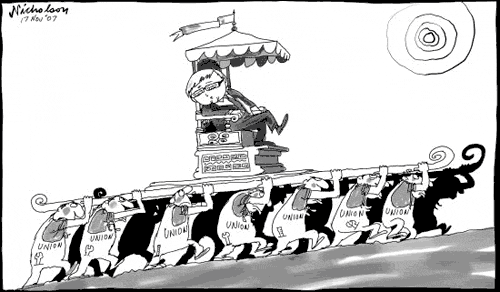
In the same way, on all levels of the economy, unionized socialism has created privileged classes of workers that exist at the expense of the underclass. As such, it has become a parasitic formation that is connected to the capitalist economy the way a parasite is connected to a healthy host body. It would then seem to be in the unions' best interests not to immobilize the host body lest they die along with it. The paradox of the union movement is that it succeeds as long as it fails to grow. A unionization of the entire country would not only end current exclusive privileges, but would make the economy so stagnant that the ensuing economic crisis would force the government to manage labor relations, restrict union powers, and revise labor contracts. Such a prospect is not so far-fetched, given some stated government aspirations to regulate paid vacations and sick leaves. This may seem friendly to the unions, but history indicates that when an intrusive government assumes union functions, friendship ends and a competition for power begins, in which the government of course prevails. Having fulfilled their historical mission of advancing a state-run economy, the unions will outlive their usefulness and succumb to the fate of their Soviet brothers as voiceless puppets of tyranny. And since forced economic equality tends to result in forced inequality of the authoritarian state, unionized workers will end up being an underclass ruled by the powerful and corrupt state oligarchs, who are the only beneficiaries of a system that redistributes unearned privileges. If one day union activists wake up under such new management, they will only have themselves to blame.
Next: Unions: A Study in Collective Greed and Selfishness. |
3. Unions: A Study in Collective Greed and Selfishness
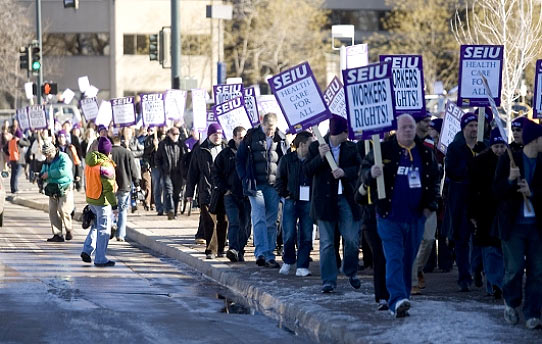
American trade unions spent almost a billion dollars in the recent election to put pro-union politicians in positions of power in Washington. The Service Employees International Union, in the words of its own president, has "spent a fortune to elect Barack Obama." According to The Washington Examiner, the United Auto Workers had taken a break from bringing the auto industry to its knees and gave $1.98 million to Democratic candidates, plus $4.87 million in independent expenditures to Obama's campaign. The money came from the mandatory dues of the workers who often wouldn't have donated or voted for these people. In return, the Obama labor shop is cutting back on the enforcement of federal disclosure rules, without which the workers won't be able to see where their money is going. The union bosses have a very good reason to hide their activities: the AFL-CIO has been spending so much on politics that they're going deeply into debt.
When the current recession began, the first weak links to break in the damaged economy were unionized businesses - most notably, the Big Three carmakers dominated by the UAW. By contrast, in the "Right to Work" Southern states of Alabama and North Carolina, non-unionized Japanese and German carmakers with hourly labor costs 65% lower than those in Detroit, still continue to employ more than 60,000 American workers without asking for a taxpayer-funded bailout. And, unlike many of its unionized competitors that have gone bust, the non-unionized Wal-Mart remains profitable. While the financial crisis itself was not caused by the unions, it was a product of the same economic philosophy, which prompted the government to tamper with the housing markets. It started with the desire to help a designated class of low-income families by endowing them with home ownership in the name of "economic equality and justice." But it ended with forced inequality, as countless home loans are now being repaid by taxpayers, many of whom don't even own homes and whose prospects of buying one are getting slimmer as a result. The initial market distortion created an economic gremlin - a younger cousin of the Donbass economic monster, if you will - only this time it was strategically placed right in the center of the world's economic engine.
What can go wrong when self-righteous campaigners for economic equality in the government order the banks to issue risky home loans to the poor? Only a ripple effect. The demand goes up, real estate prices rise, chances of repaying the loans get slimmer, the government further pressures the banks to turn a blind eye, the banks begin to repackage bad loans, the bubble bursts, the banks collapse, a recession ensues, borrowers lose jobs and can't afford payments, and the entire financial system goes down. In the worldwide crisis that follows, countless poor people overseas who will never have a house, become even poorer than they were before the US government decided to enforce "economic equality and justice." Predictably, the fiasco is blamed on capitalist greed and selfishness. * * * The word "selfishness" is widely known as a trademarked fighting word, synonymous with immorality. Leftist ideologues liberally use it to club defenders of capitalism over their ruggedly individualistic heads. However, the same ideologues never decry selfishness when it is practiced by a group - either assuming that selfishness by definition cannot be collective, or that by being collective, selfishness gets an upgrade to a higher moral status, as if things perpetrated in the name of the community cannot be immoral.
And yet, not only has group selfishness always existed on all levels of society - from warring gangs and clans to nations and races - but selfishness exerted by collectivist pressure groups often is the basest, the most irrational and immoral form of selfishness. While selfishness of an individual can be either rational or irrational, depending on whether it is based on reason or raw emotion, group selfishness is always irrational because crowd psychology is mostly driven by primeval collectivist instincts. Mussolini was well aware of the power of group selfishness, having built an entire ideology upon it, which he named fascism after the fasci - a bundle of rods tied together so that they couldn't be broken. In Ukraine where I grew up, folk wisdom summed it up in a sarcastic proverb, "Collectively, even beating up your own father is a breeze." A moral strength that motivates one to succeed in life through one's own effort and self-improvement can also be described as selfishness. But the collectivists make no distinction between an individual's rational, constructive pursuit of self-interest - and the irrational, destructive selfishness that drives one to sacrifice other people's lives or property for one's own personal gain or to become a leach on society. The two kinds are world apart - and yet they are often lumped together, especially with the purpose of discrediting successful people and businesses. The extreme expressions of one's irrational, destructive selfishness - fraud, theft, extortion, and violence - are punishable by law. The society never fails to condemn it as immoral, and rightly so. But when the same irrational, destructive selfishness is displayed by a group, it seldom causes quite the same moral indignation. Likewise, collective fraud, theft, extortion, and even violence don't necessarily result in punishment.
In today's ideological climate, sacrificing other people's lives or property for collective gain, or striving to become leaches on society, is hardly deemed criminal or immoral. On the contrary, group selfishness is being extolled as a virtue and paraded under such euphemistic Orwellian labels as fairness, justice, equality, awareness, and civil rights. According to the collectivist moral code, no sacrifice is too great as long as it is done for the sake of the "many" - even if these "many" are a narrowly defined group with irrational selfish interests seeking to live at the expense of other groups. In the 20th century, the same moral code inspired communists to sacrifice "some" for the sake of the "many" - with the estimated numbers of "some" ranging from 100 to 200 million people. Nazis used a similar collectivist moral code as they sacrificed millions of innocents to their perverted idea of the "common good," although they could hardly compete with communists in the scale and effectiveness of their altruistic outreach. But even if it hadn't resulted in grotesque mass murder, group selfishness would still be immoral because it dehumanizes people by denying them their unique individuality and alienating them from their human selves. It causes people to be judged, not by the content of their character, but by their color, class, income, ethnicity, sexual preferences, or trade associations. And when these secondary attributes supplant primary human attributes, people cease being individuals and become two-dimensional cardboard cutouts, social functions, sacrificial animals, and expandable pawns in the clash among collectivist pressure groups for unearned status, privilege, money, and power. In the United States, the corrupting influence of unearned entitlements, fueled by class envy and cultivated grievances, has already recruited enough members to form a solid voting bloc, whose elected representatives never stop trying to legitimize the collectivist new order. The claim on unearned entitlements goes hand in hand with the claim on unearned moral authority - a travesty that few dare challenge. And as the number of unchallenged travesties continues to expand, so does the number of collectivist pressure groups and their appetites.
Another popular fighting word trademarked by leftist ideologues is greed. Equated with immorality, it is used daily in the left-leaning American media to support a barrage of anti-capitalist arguments. The American Heritage Dictionary defines greed as "an excessive desire to acquire or possess more than what one needs or deserves." Let's leave aside the subjective word "need," as well as the question "Who defines need?" for another discussion. The key word here is "deserve," which is synonymous with "earn." And while an individual's desire to possess more than what one has earned is being justly condemned as immoral, a collective desire to possess more than what members of a group have earned is becoming increasingly morally acceptable to many Americans, who are now willing to sacrifice their own country to the illusory moral superiority of group interests over individual rights. At first I was shocked that people as richly endowed with individual freedoms and opportunities as Americans could fall for such a backward and repulsive social model. But pressure groups admittedly possess a perverse kind of magnetism, similar to that of street gangs, which seem attractive enough for some people to join and forego the chance to advance oneself in the real world. Membership in a gang gives one the sense of belonging without the requirement of self-improvement. One doesn't need to be an achiever, lead a moral existence, or do anything at all for that matter - all one needs to do is shed his human individuality and not ask questions. Collectivist pressure groups are all that and much more. They bait people with the promise of instant entitlements just for being a member. Each group has its ascribed role, legend, grievance, and a turf of operations. Each group pulls the blanket of privileges and exclusive rights onto itself, creating new rules and setting up new terms that render the Constitution meaningless. Together, they create an illusion of a vast moral majority, a representative body competing with the US Congress, an alternative government, a massive front battling American capitalism and individualistic civilization.
While any of these groups would more or less fit Lenin's template as "a school of communism," trade unions have been the undisputed pioneers that blazed a trail for the rest of them. Today, they continue to be the most active and powerful players in the system they helped to create. Next: Rigging the Economy in the Name of "Justice." |
4. Rigging the Economy in the Name of "Justice"The demands of forced economic equality are usually justified by the "growing gap" between rich and poor, and men and women, as well as various groups of minorities. Such demands are usually followed by a plan to improve on reality by aggressively tampering with market forces - which, as we already know, can only make the existing income gap worse due to the resulting poverty, economic stagnation, and limited upward mobility.
In a free society, an income gap results from the success of some and the failure of others, and is, on the most part, fair. A rational, constructive way to diminish this gap is to increase the number of successful people by ensuring that everyone has the freedom and opportunity to earn an honest income.
That is why the only unfair income gap that deserves to be looked at in today's US economy, is the gap between the market-based, non-union wages and the artificially inflated union wages - a gap that was deliberately created by twisting the arms of businesses, paying off politicians, and lobbying for anti-business regulations. Observe an absurd charade: union-forced unequal pay for equal work has the blessing of the champions of "fairness" who like to preach equal pay for equal work, while all they really advocate is equal pay for unequal work - otherwise known as the communist principle "from each according to his abilities, to each according to his needs." And these are the same people who can't shut up about the unfairness of capitalism. They argue that the gap wouldn't exist if all workers joined in solidarity and demanded higher wages, benefits, and job guarantees - or, better yet, elected a government that would force the employers to pay up. Let's test this theory and assume that, as of this morning, all Americans have become equally entitled to union-style wages and benefits. What happens next? The prices will go up on all essential products. Unionized workers will lose their current advantages. Naturally, the unions will go on strike and use all means in their arsenal to upgrade their members to a "more equal" status. Once they've been upgraded, things will return to the old unequal ways - only now the cost of living will be much higher and the people's savings accounts will be severely depreciated. The country will emerge from the pay hikes poorer than before. And that will only be the tip of the iceberg. The unreasonably high cost of American products will make them less competitive internationally. To maintain a comfortable standard of living in a shrinking economy, Americans will increasingly rely on the influx of cheap products from countries that hadn't been touched by the wage cycle. A skyrocketing trade imbalance will undermine America's standing in the word. A greater number of American businesses will now be outsourcing jobs or hiring illegal migrants in order to stay afloat. The worsening unemployment, economic recession, and the growing income gap - both domestic and international - as well as the media campaign blaming the crisis on greed, selfishness, and other evils of the free market, will rally more people under the banners of economic equality and redistribution. In the absence of articulate opposition, free enterprise will lose its former attractiveness and Americans will elect a socialist government that will nationalize key industries and begin openly to dismantle the framework of capitalism. If you find such a dystopia frightening, I have news for you: it is already happening.
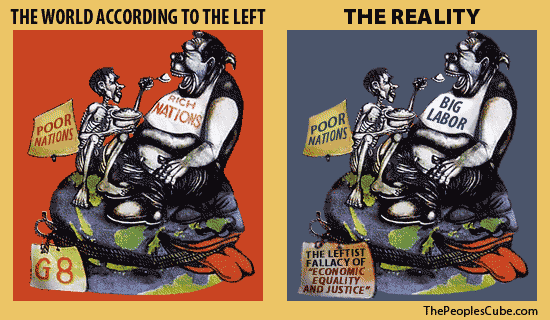
The deeper we go, the more Lenin's words seem like a prophecy. But there's more: the unions are instrumental in fulfilling yet another of Lenin's directives: "The way to crush the bourgeoisie is to grind them between the millstones of taxation and inflation." And the current US government is going down this path, trying to mend the income gap and the runaway cost of living by increasing the minimum wage. Unsurprisingly, trying to fix an artificially created imbalance by inventing more artificial measures is proving to be as effective as quenching fire with gasoline. In the meantime, the self-righteous campaigners for economic equality apply the same approach to narrow the global income gap by sending aid to poor nations - knowing full well that most of it ends up in the coffers of local autocrats whose people continue to live in abject poverty. Granted, the disparity between rich and poor countries exists to a large extent due to the stark differences in the productivity of labor. But that doesn't tell the whole story. The gap has reached such absurd proportions in large part because the wages inside the industrialized rich nations have been artificially raised to unrealistic heights in the course of repeated, futile cycles of union pay increases, followed by price hikes on most products, with the rest of the national wages trying to catch up. Who is footing the bill? In an isolated closed system, when things reach a limit of tolerance, the system must either balance itself or break apart. But a country's economy is never a closed system. Western economies are connected to poorer nations, whose lower wages and cheaper raw materials temporarily compensate for the unsustainable costs of maintaining overpaid unionized labor at home. If poor nations are selling their products at market prices while buying Western products at a price that includes the full cost of the union wages, pensions, healthcare, and other benefits, they are clearly being taken advantage of. For this they should send their thanks to the campaigners for "economic equality and justice" - who, incidentally, are also the loudest voices in the chorus denouncing rich nations that get richer by robbing poor nations that get poorer.
The tired leftist adage is actually true - but its real causes have nothing to do with imperialism, neocolonialism, capitalist globalization, or any of the other phony labels they fabricate. These labels imply that capitalists are deliberately conspiring to promote "unfairness" out of personal greed and selfishness - while their opponents, by virtue of defending "fairness," speak from the position of morality and transparency. But if "moral" is that which advances poor nations and "immoral" is that which inhibits them, then morality is clearly on the side of capitalism. Likewise, if "fairness" means a level playing field, then it entails the elimination of inflated wages and other unearned entitlements, both home and abroad, making all price creation equally transparent. The expression "level playing field" alludes to the requirement for fairness in games where a slope would give one team an advantage. I am not an athlete; if I play against an NFL professional on a level field, I will lose fair and square. But if we apply the theory of "economic equality and justice" to sports, a fair game would be played if I had a slope and the NFL professional wore foot shackles, while the referee would continually tamper with the scores and rule consistently in my favor. I wouldn't even have to practice, build strength, and learn strategies; the revised rules would already give me a chance to win. Any sports fan will tell you this is unfair and such rules would be the death of football. And yet, when the same rules are applied to the economy, very few call it unfair or worry about the demise of the market. On the contrary, many agree that this would give someone a mythical "fair chance," although no one knows exactly how and who will be the beneficiary of this. When the game is rigged, what becomes of its purpose? Who decides what is "fair" and which team is entitled to a bigger advantage? How do we know what bribes are being passed under the table? How can we tell who is a better player or what training, techniques, and strategies are the most effective? The same questions apply to a rigged economy. Tampering with the market not only breeds economic unfairness, but it endangers the only fair gauge of the true cost of things in the world. Without the open, transparent market, what becomes of the meaning of "fair price"?
It couldn't have happened any other way because the enforcement of all such ideas requires a serious intrusion into the people's lives by the omnipresent state, which also must own all of the nation's resources. This makes any president of such a state an ultimate omnipotent ruler of the land and its people. Naturally, in the absence of individual rights, opportunities, and the rule of law, the president's seat becomes a magnet for an endless array of warlords, military thugs, and leaders of nationalistic mobs driven by collective greed and selfishness. Most of these leaders have no idea how to run a country, don't care, and may never have wanted it - if it weren't also a magic key that makes its master a virtual owner of all the foreign aid, gold, diamonds, or whatever else Western geologists can find in the bowels of the state-owned land. This helps to account for the record number of military coups, civil wars, and bloody atrocities happening in the Third World today.
Note that all the currently warring mobs justify their actions by the desire to take better care of the people, enforce fairness, improve redistribution, and use similar quasi-Marxist rhetoric, which has become a prerequisite for the official recognition of a regime by the "world community." Once in power, they spend their days stealing foreign aid, pilfering the country, looting their neighbors, and fighting off uprisings led by similar thugs who also promise to fight corruption, enforce fairness, and improve redistribution. A sufficient warning sign that the system is failing is the fact that no foreign-aid-sponsored president steps down voluntarily. The greatest fear of all ex-dictators is to become equal with the people they once "cared about" - poor, powerless, and vulnerable to abuse by any new thug in power. Granted, the "caring" rhetoric as a disguise for abuse and thuggishness is not limited to Third World despots. It exists in any society that accepts rigging the game in the name of "fairness" as its official ideology. I have seen it in abundance while living in the USSR, but that is what my next chapter will be about. Next: Want a Crisis? Impose "Fairness" |
5. Want a Crisis? Impose "Fairness" |
|
The self-righteous campaigners for "fairness" use a clever trick to advance their ideas. They shock fellow Americans with statistics of how outrageously low wages in the Third World are, without adding that prices on the local markets are low in the same proportion and that people might be able to get by on a dollar a day. That's what my own family's budget was at one time - and we weren't dressed in rags and we didn't starve. Living was cheap as long as one wasn't considering imported goods or foreign travel. Of course, a pair of black market made-in-the-USA Levis equaled a month's wages.
In the absence of the free market - the only reliable instrument of price creation - prices and wages were determined by the government. Everything was state-subsidized, which may sound like a great idea to all those who don't realize that state subsidies come from their taxes.
The Soviet tax system was a mystery wrapped in an enigma. Under Stalin, taxes were integrated into the state-run economy by default and the workers didn't actually "pay" them. The government simply kept everything according to its needs and gave the workers the rest - just enough to eat and buy simple clothes. On top of that, in the 1960s, Khrushchev introduced a flat income tax of about 10%, which was deducted automatically, without any need to file tax returns. The exact combined income tax was unknown due to a complete lack of transparency, but according to some estimates, it was as high as 95%.
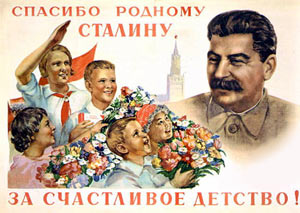
Such camouflaged taxation allowed the official propaganda to describe taxpayer-subsidized services - healthcare, education, and housing - as "free gifts" from the benevolent Party and the government, for which the people had to be eternally grateful. I remember that formulation, taught to me in the state-run school named after V.I. Lenin.
At a closer look, however, the "gifts" turned out to be economic traps, restricting people's choices in healthcare, education, and housing. Even moving to another city was an almost insurmountable problem.
Such government "largesse" turned people into slaves of the state. Little wonder it resulted in a Third-World-type poverty.
But the international income gap is not set in stone. When some Asian countries admitted that their poverty was the consequence of archaic political and economic systems, they remodeled themselves and embraced capitalism. It caused a torrent of sob stories in the Western media, in which well-paid journalists championed "economic equality and justice" by blaming local and Western entrepreneurs of running sweatshop economies. Armies of smug armchair egalitarians participated in well-funded, professionally orchestrated boycotts against companies like Nike that dared build factories in the area and give jobs to poor Asian families.
It almost seemed they didn't like the fact that the Asians made an effort to improve their lot instead of begging and demanding aid from richer nations like the rest of the Third World did. But the Asians knew better. Today, such formerly poor countries as Hong Kong, Singapore, and South Korea enjoy median household incomes that are twice as high as those in the former Soviet Republics, which continued to protect their labor. They achieved it, not by accumulating grievances and demanding entitlements, but by releasing their potential through free enterprise and technological advancements. And others are on the way.
Even the Chinese communists have come to the realization that, instead of exporting "the workers' paradise" they would be better off exporting consumer goods. Seeing that their experiments in "fairness" resulted in disastrous poverty, they scaled back forced equality and jump-started a new semi-capitalist economy by entering into a symbiotic relationship with the arch-capitalist America. The last thing China needs right now is for the US to turn into a China, which would be a giant step backwards for both nations.
In the past, Marxist state-run economies had to rely on the capitalist free market to determine the true cost of their own products. Today, as major capitalist economies themselves are falling under the spell of anti-market regulations, the true cost of their own products is also becoming unclear, causing an unsustainable growth of wages and cost of living. This leaves the least regulated economies of the upstart capitalist nations as the only reliable gauge of the true cost of labor and products.
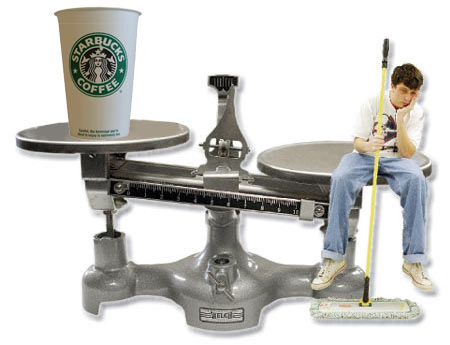
The more realistic foreign wages may seem scandalously low to Americans who don't cringe at $4 for a Grande Caffe Latte. Quite a few of them enjoy sitting at Starbucks in the company of like-minded comrades - each holding a cup of overpriced fair-trade-certified coffee - and complaining about the "unfairness" of this economy, the income gap, big corporations taking advantage of low-wage foreign laborers, and the outsourcing of American jobs. They would surely be surprised to learn that the amount they're paying for one Grande Latte may actually be the true cost of their own day's work and in a truly fair economy, it would also be a fair daily wage.
But they could still go to Starbucks - in a fair economy, a cup of coffee might also cost about ten cents, in addition to a forty cent lunch. And - best of all - low domestic wages would bring those outsourced jobs back!

They might be even more surprised to learn that the "evil" corporations are their best allies, both politically and culturally, being some of the biggest champions of state-regulated entitlement programs and labor wage hikes, thus making the $4 coffee at Starbucks affordable to the masses. Proponents of forced economic equality like to explain corporate support of government entitlements as evidence that such programs are actually good for business - otherwise why would these "mega-monsters of predatory capitalism" encourage entitlements?
But the truth is much more cynical: anti-market measures give big companies an unfair advantage over smaller competitors and upstarts who can't afford to have a lobbyist in Washington, and who will choke on higher wages, taxes, and entitlements, while large corporations can swallow the extra cost more easily, as economies of scale allow a smaller price increase on their products.
Corporations are neither demons nor angels - they are merely playing by the rules given to them by the government, which keeps "correcting" the action to make it more "fair" by inventing new rules and tampering with the score in the middle of the game. The rules may be always changing, but the goal does not. And the primary goal of any business organization is profit. So the players must keep adapting to the changing field conditions in order to benefit the shareholders. And if trying to make the best of a rigged game is turning them into monsters, the fault is not so much with the players as with those who have corrupted the game by fixing it.
So the next time a proponent of "fairness" gripes about the rich getting richer and the poor getting poorer, we should agree wholeheartedly - adding that the reasons for the shrinking middle class and the stagnant economy are government regulations born of the dream of forced economic equality, which in real life results in a rigged game, arrested upward mobility, and a more rigid class structure.
The same argument applies to the champions of forced global equality. Since the productivity of labor cannot be redistributed globally, the only option within their reach is a global redistribution of wages, which they see as a variable they know how to control and some have made careers out of it. Instead of leveling the playing field by reducing the government dictate, and by promoting liberty, opportunity, and property rights in developing nations - which is the only fair, realistic, and moral solution to poverty and stagnation - the collectivists are now proposing the imposition of a global minimum wage.
This is as practical as legislating a greater rainfall in the Sahara Desert, or establishing international quotas on floods, pestilence, and volcano eruptions. The only thing that is certain to start growing as a result of this measure will be the power of the coming global government, whose first major task will be to tackle a self-inflicted global crisis.
Next: The Fallacy of "Economic Equality"
6. The Fallacy of "Economic Equality"
On the surface, the idea of economic equality may seem like an honorable moral goal, which explains its resilience and power over people. This is why it continues repeatedly and with impunity to bring one economic and social disaster after another anywhere it's tried. On the flip side, opponents of economic equality are branded as greedy, selfish, and immoral - which is why few politicians dare oppose this absurdity. The current political debates mostly end up in the following compromise: capitalism may be more economically efficient, but it's still morally inferior to economic equality that benefits most people. Such a view has two big problems. It is, in fact, efficiency that benefits most people by raising living standards, reducing the number of workers involved in low-paying and tedious manual work, increasing the number of well-paid intellectual jobs, continually improving everyone's quality of life, and giving the poor access to things that only the rich could enjoy only a short while ago. Therefore, efficiency is moral - and, as such, it renders the above formula invalid. But let's assume for the sake of argument that economic equality is also efficient, so that we could leave this part out and compare what's left. The resulting picture still doesn't stand moral scrutiny. Since economic equality cannot be attained by bringing everyone up to the level of the achievers, the achievers will have to be brought down to the level of mediocrity, with most of their earnings and property taken by the government. Even the most "progressive" achievers wouldn't submit to this voluntarily (see Hollywood tax returns), so it has to be a forced measure. To do this on a national scale, the state must assume supremacy over private citizens and limit certain freedoms. What's more, forced extraction and redistribution corrupts the government by giving it arbitrary powers to determine various people's needs, for which there can be no objective standards. Most bureaucrats are not paragons of honesty, and even if they were, in due course idealists will become replaced by eager crooks seeking to distribute entitlements in exchange for kickbacks. And finally, such a system corrupts the very people it intends to help, by demeaning the individual productive effort and encouraging a destructive collective scuffle for unearned privileges among pressure groups driven by greed and selfishness.
Some people understandably fear the uncertainty of outcome of their daily efforts, seeing it as a dangerous void separating them from a safe and comfortable future. A rational reaction to this would be to remind oneself that, ever since people lived in caves, nature has never offered us certainty, and that risk-taking, combined with intelligence and creativity, has built modern civilization - which may be imperfect, yet it's as good as it gets historically in terms of comfort and safety for those participating in it.
The problem with this plan is that the void has no bottom. Enormous wealth is known to have disappeared in it without a trace, along with many people's dreams, aspirations, and entire lives. And even if it could be filled, against all laws of nature and economics, what kind of monsters do we expect to enjoy walking over this smoldering mass grave and be happy on the other side of it? What does it say about the moral character of the champions of this plan? * * *
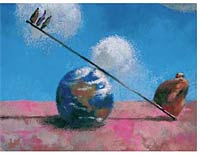
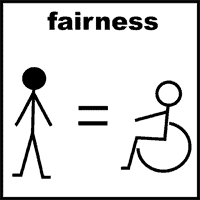
If some people had wings and others didn't, and the government wanted to enforce "fairness," soon no one would have wings. Because wings cannot be redistributed, they can only be broken. Likewise, a government edict cannot make people smarter or more capable, but it can impede the growth of those with the potential. Wouldn't it be fair if, in the name of equality, we scar the beautiful, cripple the athletes, lobotomize the scientists, blind the artists, and sever the hands of the musicians? Why not? Back in 1883, a Yale professor, William Graham Sumner, brilliantly addressed these issues by explaining why the real progress of civilization is attained, not by redistributing wealth, but by expanding economic opportunities and ensuring people's liberty to earn their own wealth. And since some will always profit eagerly from the opportunities while others will neglect them altogether, the greater the freedom and opportunity in a society, the more economically unequal the citizens will become. "So it ought to be, in all justice and right reason," said Sumner. "The yearning after equality is the offspring of envy and covetousness," Sumner wrote in his book What Social Classes Owe to Each Other . "And there is no possible plan for satisfying that yearning which can do aught else than rob A to give to B; consequently all such plans nourish some of the meanest vices of human nature, waste capital, and overthrow civilization. But if we can expand the chances we can count on a general and steady growth of civilization and advancement of society by and through its best members. In the prosecution of these chances we all owe to each other good-will, mutual respect, and mutual guarantees of liberty and security. Beyond this nothing can be affirmed as a duty of one group to another in a free state." Already back then, Sumner's views were opposed by the self-described "progressives." Today, more than 130 years later, their spiritual heirs have finally gained enough power and moral authority to remake the nation and to slice and distribute the stolen American pie to collectivist pressure groups. Ironically, they couldn't have done it without all the real progress America has achieved despite their efforts. And, as the campaigners for economic equality are dismantling civilization, wasting capital, and regressing to the archaic tribal mentality, they insist on calling it "progress." They also insist that they are doing it "for the children," which is going to be the subject of the next chapter. Next: Joyriding the Gravy Train of Economic Inequality. |
7. Joyriding the Gravy Train of Economic Inequality
Let us imagine a utopian country named Sovdepia, whose people love the children so much that they voluntarily agreed to redistribute all their material wealth equally to level the playing field for future generations. Let's further imagine that a few years later we visit Sovdepia on a taxpayer-funded fact-finding mission. Upon arrival, we are surprised to see how little material equality is left, especially among the children. We find local social scientists and ask them what happened. They sadly point at the differences in the Sovdepians' habits, virtues and vices, ambitions, health, and plain dumb luck. But the most powerful reason for inequality, they tell us with dismay, turns out to be the highest Sovdepian virtue - the unconditional love of the parents for their children and the desire to do the best for them.
The truth is, even the most hardnosed Soviet ideologues still cheated the system when it came to their offspring. Having risked life and limb fighting for universal equality, they all ended up inventing creative workarounds to make their own children "more equal" than others. Who can blame them? They were human, even if they denied humanity to everyone else. And who can blame Barack Obama for sending his two daughters to an expensive private school? He only wants the best for his children, even if he is promoting the inferior public school system for everyone else's. No parent, including the politicians who are forcing economic equality on Americans, will deny their own children added privileges that come with government positions. Anything less would be heartless and uncaring, even if it would contradict their life-long battle against the "heartless and uncaring" opponents of economic equality, which they themselves will be now violating. Given that parents will always be in different positions to endow their offspring, the next generation following any hypothetical Great Redistribution of Wealth will grow up economically unequal. Only this time, in the absence of freedom and opportunities, their wealth and privileges will be largely unearned. And that will finally give the "yearning after equality" the moral validity it badly lacked before. But until such time, while equal freedom and opportunity still exists, the only justification for the forced redistribution of wealth is class envy - an emotion based on a subjective perception of other people's wealth regardless of how it was earned. And the relative and subjective nature of wealth makes the case for its redistribution even flimsier.
The apparatchiks liked to be called "people's servants." Unlike their less equal "masters," they were allowed to travel to the West. The striking material contrast must have caused many of them to entertain a criminal thought that, were they to discard their own system of government redistribution and give people the opportunity to earn real income without government obstruction, everyone's living standard would quadruple - including their own. But since in a free and competitive society they wouldn't be the ones with the most power and privilege, the certainty of smaller unearned rewards outweighed for them the opportunity to earn greater rewards with honest efforts. So they continued to "serve" the people by keeping them down and staying on top. Observing the class-envy mentality on both continents, I noticed a recurring pattern: other people's wealth always appears larger and irritates more forcefully at a closer distance. Since envy is based on emotion rather than reason, one's personal perception of a wealthier neighbor is more unsettling than some distant, greater wealth measured on an abstract absolute scale, which can only be perceived by reason. The reverse side of the class-envy mentality is the notion that being better off than your neighbor is more satisfying than being wealthy by absolute standards while knowing that your neighbor still has more. The folk wisdom of my home country put this in a story: a king promised a peasant that he would grant him any wish on condition that his neighbor would get twice as much. The peasant laughed and asked the king to poke him in one eye. In another tale a man who could wish for anything, wished that his neighbor's cow were dead. And so on. An historical comparison makes the relative nature of wealth even more obvious. While today's poor people may seem poor compared to their middle-class neighbors, on an absolute scale they are better off than the rich people in the days of William Graham Sumner. Not only do they have better medicine, longer life expectancy, running hot and cold water, electricity, gas stoves, and indoor plumbing - they have what even the richest and the most powerful people on earth couldn't dream of - camera cell phones, digital players, air conditioners, refrigerators, microwaves, TVs with hundreds of channels for entertainment, video games, DVD players, fast and comfortable cars with music and AC, air travel, and computers that can instantly connect them with anyone in the world.
The Soviet Union's backwardness was caused, not by the lack of ingenuity of its people, but by the counterproductive economy of state-regulated socialism. Without capitalist achievements to learn from and copy, the USSR would have remained perpetually stuck in the 1930s. And so would the United States, if the American "progressives" who opposed Sumner were to get the upper hand a century ago and halt the development of capitalist entrepreneurship. In that case, the few remaining rich people in America would be living blissfully unaware of the unfulfilled possibilities of the 21st century, where even the poor could have had a better quality of life.
Thus, class envy is an unmistakably irrational perception. And since the demands for economic equality and redistribution of wealth are the derivatives of this perception, they are just as irrational, unsupported by reality, harmful, and immoral as class envy itself. The very notion of economic equality implies that our lives are determined solely by material factors and that nothing spiritual matters. Granted, human dignity requires a certain minimum of material comfort. But once we are above that threshold and still continue to measure our dignity and our entire existence by the level of material comfort, we are, by implication, degrading free will, intellect, liberty, opportunity, and the greatness of the human spirit. This is an ugly distortion of human nature, to put it mildly. It is this philosophical view that allows the "progressives" to excuse skyrocketing crime by pointing to the "poverty" of its perpetrators, despite the obvious fact that no hardship during previous generations ever produced such an obscene crime rate.
This "something else" is precisely the consequence of the view of human beings as spiritless creatures, devoid of mind and free will, and dependent on the government for sustenance. It also happens to be a view that permeates today's media coverage of domestic and international events, as well as films, books, and TV shows produced by cultural elites obsessed with economic equality. Few of them will argue that the spiritual rewards one derives from life are often more important than the material ones, and that a poor artist may enjoy a richer spiritual life than a government clerk or a CEO. But doesn't that make them spiritually unequal? Shouldn't cultural elites make award-winning movies and documentaries exposing an appalling spiritual unfairness? Shouldn't they call for massive street protests against the poor artist - the metaphysical hog who selfishly hoards spiritual values and leaves others to live in moral depravity? Shouldn't the clerks and the CEOs use media channels to vent their spiritual envy, decry the spiritual gap, and give scripted media interviews about the indignity of living in a system that allows the rich in spirit to get richer as the poor in spirit get poorer? Where are the self-righteous campaigners for spiritual equality? Let us defer these questions to the experts on "egalitarian justice," whose one-sided fixation on economic equality can be explained by the fortunate circumstance that spiritual equality is beyond their control, or they would be redistributing that as well. Not that they haven't tried to redefine spirituality, supplant it with a surrogate version, and preach the redemption of guilt for having a bourgeois lifestyle. The redistribution of surrogate spiritual units in the form of carbon offsets payable to the Church of Climatology is one of the recent additions, along with the new definition of original sin as "having been born as a carbon-based life form." The only kind of equality that can be realistically achieved among humans is equality before the law, meaning equal rights and opportunities for all. Despite some historical setbacks, such equality has already been achieved in the Western world, and its beneficial results are obvious. Equality before the law is incompatible with forced economic equality, which rigs the game by infringing on the rights of the more productive in favor of the less productive, limiting opportunities for some to benefit others, and taking by force from one select group only to give unearned material gains to another select group.
The only real choice before us, therefore, is not between economic inequality and economic equality, but between two types of economic inequality.
These are not rigid classes; people can change their lives if they want to, and their children do not have to follow in their footsteps if a certain lifestyle or profession does not match their idea of happiness. Their material rewards are just because they are determined by the free market, and the differences motivate everyone to be more creative and productive. This system has brought prosperity, opportunity, and happiness to most people, making them equal beneficiaries of liberty and human dignity, as long as they don't succumb to crime, drugs, or class envy.
Given the existence of two distinct and unequal classes, the citizens face only two basic choices: to be a silent slave of the corrupt establishment, or to join the establishment and climb up the career ladder towards the unearned rewards and further away from the faceless, "less equal" masses below. Equality before the law ceases to exist, along with individual choices, aspirations, dignity, opportunity, and liberty - all sacrificed to the utopian illusion of "fairness." As a result, neither the masses nor their rulers are happy with their lives. Some years ago I escaped from the shipwreck of the Soviet "workers' paradise" and moved to the United States, making a conscious choice between the forced inequality of socialism and the volunteer material inequality of capitalism. I didn't expect to be rich; I only wanted an opportunity to earn an honest income without sacrificing my dignity. I wanted the freedom to pursue my own choices and aspirations, not the ones prescribed by the state. I wanted to live in a country where my success or failure would depend on my own honest effort, not on the whim of a bureaucrat. I wanted my relations with people to be based on voluntary agreements, not mandatory requirements. And finally, I wanted my earnings to be protected by law from wanton expropriation. America deserves credit for living up to the ideas of liberty and fighting off the redistributionist utopia for as long as it has. As crippling as the hosting of two opposing economic systems can be, it still remains a free country. But the balance is rapidly changing. Like many immigrants seeking freedom and opportunity in America, I find this change not simply misguided but personally painful. And so do all freedom-loving people elsewhere in the unfree world, for whom the mere existence of this country still gives hope and validates their belief in liberty and individual rights. ------------- |
Red Square
....Few of them will argue that the spiritual rewards one derives from life are often more important than the material ones, and that a poor artist may enjoy a richer spiritual life than a government clerk or a CEO. But doesn't that make them spiritually unequal? Shouldn't cultural elites make award-winning movies and documentaries exposing an appalling spiritual unfairness? Shouldn't they call for massive street protests against the poor artist - the metaphysical hog who selfishly hoards spiritual values and leaves others to live in moral depravity? Shouldn't the clerks and the CEOs use media channels to vent their spiritual envy, decry the spiritual gap, and give scripted media interviews about the indignity of living in a system that allows the rich in spirit to get richer as the poor in spirit get poorer? Where are the self-righteous campaigners for spiritual equality?...Czar Czar
{proggoff}
Quote:
When there is a question of the press, we first ask which press â the bourgeois or the workersâ press; when there is a question of gatherings, we ask what gatherings â workersâ or counter-revolutionary; when a question arises of strikes, the first question for us is whether it is a strike of the workers against the capitalists, or a sabotage instigated by the bourgeoisie or the bourgeois intellectuals against the proletariat. He who makes no distinction between these two things is groping in the dark. The press, meetings, unions, etc., are weapons of the class struggle. And in a revolutionary epoch they are the weapons of civil war, together with munition stores, machine guns, powder and bombs. The great question is: which class is using them as a weapon against the other. The workersâ revolution cannot possibly grant freedom for the organization of such risings as those of Korniloff, Dutoff, or Miliukoff against the working masses. Neither can it allow full freedom of organization, of speech, press, and of meetings of the counter-revolutionary bands who are stubbornly carrying on their own policy, and only lying in wait for a chance of throwing themselves upon the workers and peasants.Quote:
Now that we have conquered, there is no longer any need for such civil liberties.

Quote:
Gee, I guess Unions are Bad. I know he states that this article is notan "anti-union" statement and points out where they go wrong but, HEFAILS TO TELL US WHY SO MANY UNIONS WERE CREATED.
PlĂnio Salgado
Red Square, excellent article! I e-mailed this glorious series to aQuote:
Gee, I guess Unions are Bad. I know he states that this article is notan "anti-union" statement and points out where they go wrong but, HEFAILS TO TELL US WHY SO MANY UNIONS WERE CREATED.
NY Post
In a move of stunning hypocrisy, the United Federation of Teachers axed one of its longtime employees -- for trying to unionize the powerful labor organization's own workers, it was charged yesterday.Quote:
Jim Callaghan, a veteran writer for the teachers union, told The Post he was booted from his $100,000-a-year job just two months after he informed UFT President Michael Mulgrew that he was trying to unionize some of his co-workers.The Washington Examiner
Columnist James Ahearn of New Jersey's Bergen Record has a great column today on, of all things, the stagehands at New York city's top performing arts venues such as Lincoln Center and Carnegie Hall. These are not highly skilled or technical jobs but take a gander at how much they are paid:I
history indicates that when an intrusive government assumes union functions, friendship ends and a competition for power begins, in which the government of course prevails. Having fulfilled their historical mission of advancing a state-run economy, the unions will outlive their usefulness and succumb to the fate of their Soviet brothers as voiceless puppets of tyranny.Eliska
As far as the need for Unions being outdated: There are so many state and federal laws that protect workers from unscrupulous employers, Unions have mostly become obsolete.Quote:
As New York City finishes cleaning up the mess of the recent debilitating blizzard, it also faces allegations that union workers entrusted with cleaning up the mess of snow decided to stage a slowdown as the blizzard hit.Quote:
Five of the 33 trapped Chilean miners formed a breakaway group after becoming isolated from the rest because of their status as "subcontracted workers", according to reports.Red Square
Union Workers Reportedly Staged Slowdown as New York City Battled BlizzardQuote:
As New York City finishes cleaning up the mess of the recent debilitating blizzard, it also faces allegations that union workers entrusted with cleaning up the mess of snow decided to stage a slowdown as the blizzard hit.Laika the Space Dog
Union Rule Number One: No hurry, no worry.Laika the Space Dog
Union Rule Number One: No hurry, no worry.Quote:
By RALPH R. REILAND
Mystery item No. 1Red Square
Chilean miners - before they were discovered, they weren't as united by the common tragedy and hope as most reports suggest. They quickly divided into a privileged group of union members and the scab underclass. The microcosm of 33 trapped miners reproduced on a smaller scale the vice of the bigger world, where ideas of "economic equality and justice" result in forced inequality and injustice.Red Square
From Inverstor's Business Daily -Comrade Otis
That's what gave Margaret the idea for the headline about the Nation Labor Relations Board and the unions. A little too wordy of a headline though.
Red Square
What can go wrong when self-righteous campaigners for economic equality in the government order the banks to issue risky home loans to the poor? Only a ripple effect. The demand goes up, real estate prices rise, chances of repaying the loans get slimmer, the government further pressures the banks to turn a blind eye, the banks begin to repackage bad loans, the bubble bursts, the banks collapse, a recession ensues, borrowers lose jobs and can't afford payments, and the entire financial system goes down. In the worldwide crisis that follows, countless poor people overseas who will never have a house, become even poorer than they were before the US government decided to enforce "economic equality and justice."Quote:
Lambertville vandalism turns life-threateningStogie Chomper
This so-called review is nothing more than a laundry list of Marxist sound bites. Here are a few nuggets for this reviewer to chew on:We are on track in the United States to pay more money to 20 million public sector retirees â at an average pension of $65,000 we will pay these retirees $1.3 trillion per year, then we will be paying in social security to 80 million private sector retirees â at an average social security benefit of $15,000 per year that will cost less, about $1.2 trillion per year. Providing a level of retirement security to government workers that only the wealthiest 1% can enjoy in the private sector is not âprotecting the middle class,â it is economic enslavement by government unions over the taxpayer.
Wayne Allen Root explains how public sector unions are bankrupting the United States, by the numbers:How did America become broke and insolvent? How did we build up an unimaginable $115 trillion in debt and unfunded liabilities? How did we allow the American Dream to become a nightmare?
...The truth is that government employees are the true 1%. We have far too many of them (21 million), many of them are paid too much, and their union demands are straining taxpayers to the breaking point.
They have become a privileged class that expects to be treated superior to the taxpayers â the same folks who pay their salaries and pensions. But it is their obscene pensions that are the big problem moving forward for America.
...do you know any small business owners who retire with $5 to $10 million? They are few and far between. But thatâs exactly what a private sector employee would need in the bank on the day of his or her retirement to match the $100,000 per year pensions (plus health care benefits and cost of living increases) of government employees paid out over 30 to 50 years.
Keep in mind that government employees never risk a dollar of their own money. They have lifetime job security. And they rarely work beyond 9 to 5, let alone weekends or holidays.
Yet government employees are paid millions by taxpayers to retire early, often on pensions fattened by gaming the corrupt system.
They are the true 1%.


The financial world did not collapse because of 15,000 loans from this one settlement, but this case did not exist in isolation. Cuomo held this press conference as a warning to all lenders that the Clinton administration intended to enforce the CRA broadly with all lenders, and in fact he explicitly stated this. When that didnât free up credit as quickly as Clinton desired, he and Congress mandated Fannie Mae and Freddie Mac to purchase more subprime paper â which Cuomo baldly admitted was riskier and would have a higher rate of failures â and to turn them into mortgage-backed securities, which they marketed as low-risk investments based on implicit government backing.
Quote:
Utility crews from several states East of the Mississippi River hit the road this week to volunteer their time and talents in Northeastern states hit hard by Hurricane Sandy. But crews from Alabama got the shock of their lives when other workers in a coastal New Jersey town told them they couldnât lend a hand without a union card.Quote:
The maker of Twinkies and Wonder Bread heads to court Tuesday to try to throw out its union contracts, in a battle that leaves the iconic baker's future very much in doubt.Quote:
By: Alice WolkeQuote:
This is a cause for celebration in Bronco Bama's "America".IRVING, Texas - Say goodbye to your Twinkies.You see how that works.
North Texas-based Hostess Brands, Inc. has decided to go out of business and liquidate its assets after failing to win back striking workers. The company posted a statement on a website set up specifically for people following the strike.
"We deeply regret the necessity of today's decision, but we do not have the financial resources to weather an extended nationwide strike," said Gregory F. Rayburn, chief executive officer.
"Hostess Brands will move promptly to lay off most of its 18,500-member workforce and focus on selling its assets to the highest bidders."
Quote:
For the last several years, union bosses have been fighting to effectively eliminate workersâ right to vote through secret-ballot elections on whether or not to become unionized. Yet, with 6700 membersâ jobs about to be wiped out, when push came to shove last weekâknowing how unions can manipulate other methods of votingâthe Teamsters called for the bakersâ union to hold a secret-ballot vote to let members determine whether or not to continue the strike that would close Hostess.Quote:
With an all-Democrat, three-memberâtwo out of the three being union attorneysâNational Labor Relations Board now running things without any dissent, workers and their employers in union-free workplaces are being bombarded with decisions that benefit big union bosses.CS Monitor
Mexican teachers and teachers-in-training once again abandoned lesson plans to protest education reform in the southwestern state of Guerrero this week.Quote:
Obama, IG Report refuse to touch powerful Treasury Employees Union headed by ex-IRS agent.Quote:
A union of government tax collectors that opposes small-government Conservatives & anti-tax Tea Parties--and Obama doesn't want a special prosecutor...Coincidence?| Related Articles | Author | Replies | Views | |
VIDEO: The Current Truth About Socialism and The Unions | Red Square | 39 | 13545 | |
Forward with Obama, Mao and Lenin | Red Square | 44 | 24852 | |
Al Gore Builds Time Machine, Gets Lenin Out Of Mausoleum | Red Square | 6 | 10140 | |
Lenin Awards N.J. Mayor With Eminent Domain Medal | Red Square | 20 | 39750 | |
Taxes, Penguins, and the New American Dream | Red Square | 57 | 35916 | |
Users browsing this forum: Affodeownenry and 4 guests
News
Site map
SitemapIndex
RSS Feed
Channel list
Rubiks & Rubik’s Cube ® used by special individual permission of Seven Town Ltd.
News
Site map
SitemapIndex
RSS Feed
Channel list
Gosnell's office in Benghazi raided by the IRS: mainstream media's worst cover-up challenge to date
IRS targeting pro-gay-marriage LGBT groups leads to gayest tax revolt in U.S. history
After Arlington Cemetery rejects offer to bury Boston bomber, Westboro Babtist Church steps up with premium front lawn plot
Boston: Obama Administration to reclassify marathon bombing as 'sportsplace violence'
Study: Success has many fathers but failure becomes a government program
US Media: Can Pope Francis possibly clear up Vatican bureaucracy and banking without blaming the previous administration?
Michelle Obama praises weekend rampage by Chicago teens as good way to burn calories and stay healthy
This Passover, Obama urges his subjects to paint lamb's blood above doors in order to avoid the Sequester

White House to American children: Sequester causes layoffs among hens that lay Easter eggs; union-wage Easter Bunnies to be replaced by Mexican Chupacabras
Time Mag names Hugo Chavez world's sexiest corpse
Boy, 8, pretends banana is gun, makes daring escape from school
Study: Free lunches overpriced, lack nutrition
Oscars 2013: Michelle Obama announces long-awaited merger of Hollywood and the State
Joe Salazar defends the right of women to be raped in gun-free environment: 'rapists and rapees should work together to prevent gun violence for the common good'
Dept. of Health and Human Services eliminates rape by reclassifying assailants as 'undocumented sex partners'
Kremlin puts out warning not to photoshop Putin riding meteor unless bare-chested
Deeming football too violent, Obama moves to introduce Super Drone Sundays instead
Japan offers to extend nuclear umbrella to cover U.S. should America suffer devastating attack on its own defense spending
Feminists organize one billion women to protest male oppression with one billion lap dances
Urban community protests Mayor Bloomberg's ban on extra-large pop singers owning assault weapons
Concerned with mounting death toll, Taliban offers to send peacekeeping advisers to Chicago
Karl Rove puts an end to Tea Party with new 'Republicans For Democrats' strategy aimed at losing elections
Answering public skepticism, President Obama authorizes unlimited drone attacks on all skeet targets throughout the country
Skeet Ulrich denies claims he had been shot by President but considers changing his name to 'Traps'
White House releases new exciting photos of Obama standing, sitting, looking thoughtful, and even breathing in and out
New York Times hacked by Chinese government, Paul Krugman's economic policies stolen
White House: when President shoots skeet, he donates the meat to food banks that feed the middle class
To prove he is serious, Obama eliminates armed guard protection for President, Vice-President, and their families; establishes Gun-Free Zones around them instead
State Dept to send 100,000 American college students to China as security for US debt obligations
Jay Carney: Al Qaeda is on the run, they're just running forward
President issues executive orders banning cliffs, ceilings, obstructions, statistics, and
other notions that prevent us from moving forwards and upward
Fearing the worst, Obama Administration outlaws the fan to prevent it from being hit by certain objects
World ends; S&P soars
Riddle of universe solved; answer not understood
Meek inherit Earth, can't afford estate taxes
Greece abandons Euro; accountants find Greece has no Euros anyway
Wheel finally reinvented; axles to be gradually reinvented in 3rd quarter of 2013
Bigfoot found in Ohio, mysteriously not voting for Obama
As Santa's workshop files for bankruptcy, Fed offers bailout in exchange for control of 'naughty and nice' list
Freak flying pig accident causes bacon to fly off shelves
Obama: green economy likely to transform America into a leading third world country of the new millennium
Report: President Obama to visit the United States in the near future
Obama promises to create thousands more economically neutral jobs
Modernizing Islam: New York imam proposes to canonize Saul Alinsky as religion's latter day prophet
Imam Rauf's peaceful solution: 'Move Ground Zero a few blocks away from the mosque and no one gets hurt'
Study: Obama's threat to burn tax money in Washington 'recruitment bonanza' for Tea Parties
Study: no Social Security reform will be needed if gov't raises retirement age to at least 814 years
Obama attends church service, worships self
Obama proposes national 'Win The Future' lottery; proceeds of new WTF Powerball to finance more gov't spending
Historical revisionists: "Hey, you never know"
Vice President Biden: criticizing Egypt is un-pharaoh
Israelis to Egyptian rioters: "don't damage the pyramids, we will not rebuild"
Lake Superior renamed Lake Inferior in spirit of tolerance and inclusiveness
Al Gore: It's a shame that a family can be torn apart by something as simple as a pack of polar bears
Michael Moore: As long as there is anyone with money to shake down, this country is not broke
Obama's teleprompters unionize, demand collective bargaining rights
Obama calls new taxes 'spending reductions in tax code.' Elsewhere rapists tout 'consent reductions in sexual intercourse'
Obama's teleprompter unhappy with White House Twitter: "Too few words"
Obama's Regulation Reduction committee finds US Constitution to be expensive outdated framework inefficiently regulating federal gov't
Taking a page from the Reagan years, Obama announces new era of Perestroika and Glasnost
Responding to Oslo shootings, Obama declares Christianity "Religion of Peace," praises "moderate Christians," promises to send one into space
Republicans block Obama's $420 billion program to give American families free charms that ward off economic bad luck
White House to impose Chimney tax on Santa Claus
Obama decrees the economy is not soaring as much as previously decreeed
Conservative think tank introduces children to capitalism with pop-up picture book "The Road to Smurfdom"
Al Gore proposes to combat Global Warming by extracting silver linings from clouds in Earth's atmosphere
Obama refutes charges of him being unresponsive to people's suffering: "When you pray to God, do you always hear a response?"
Obama regrets the US government didn't provide his mother with free contraceptives when she was in college
Fluke to Congress: drill, baby, drill!
Planned Parenthood introduces Frequent Flucker reward card: 'Come again soon!'
Obama to tornado victims: 'We inherited this weather from the previous administration'
Obama congratulates Putin on Chicago-style election outcome
People's Cube gives itself Hero of Socialist Labor medal in recognition of continued expert advice provided to the Obama Administration helping to shape its foreign and domestic policies
Hamas: Israeli air defense unfair to 99% of our missiles, "only 1% allowed to reach Israel"
Democrat strategist: without government supervision, women would have never evolved into humans
Voters Without Borders oppose Texas new voter ID law
Enraged by accusation that they are doing Obama's bidding, media leaders demand instructions from White House on how to respond
Obama blames previous Olympics for failure to win at this Olympics
Official: China plans to land on Moon or at least on cheap knockoff thereof
Koran-Contra: Obama secretly arms Syrian rebels
Poll: Progressive slogan 'We should be more like Europe' most popular with members of American Nazi Party
Obama to Evangelicals: Jesus saves, I just spend
May Day: Anarchists plan, schedule, synchronize, and execute a coordinated campaign against all of the above
Midwestern farmers hooked on new erotic novel "50 Shades of Hay"
Study: 99% of Liberals give the rest a bad name
Obama meets with Jewish leaders, proposes deeper circumcisions for the rich
Historians: Before HOPE & CHANGE there was HEMP & CHOOM at ten bucks a bag
Cancer once again fails to cure Venezuela of its "President for Life"
Tragic spelling error causes Muslim protesters to burn local boob-tube factory
Secretary of Energy Steven Chu: due to energy conservation, the light at the end of the tunnel will be switched off
Obama Administration running food stamps across the border with Mexico in an operation code-named "Fat And Furious"
Pakistan explodes in protest over new Adobe Acrobat update; 17 local acrobats killed
White House: "Let them eat statistics"
Special Ops: if Benedict Arnold had a son, he would look like Barack Obama
I Own The World
Supercommissar Maksim
It's Big Fur Hat
Blur-Brain
Terry Colon
The Fine Report
The Looking Spoon
Sad Hill News
Professor Kurgman
kathy blog
FAQster
AWOL Civilization
BestObamaFacts.com
Looking at the Left
Red Planet Cartoons
Julia Gorin
Brain Terminal
Death By 1000 Papercuts
Zombietime